How the Revenue Performance System works
See how we diagnose what is broken, align channels to the funnel, and improve pipeline through structured testing and reporting.
Most marketing teams are not short on activity. They are short on performance clarity. We help leaders diagnose what is broken, align channels to revenue goals, and run a disciplined improvement rhythm that produces measurable pipeline.
Get a Performance Diagnostic →Built for mid-market teams that need answers for leadership, not more noise.

Why most pipeline systems break down
More activity does not create more pipeline when the system is unclear
Most teams do not have a channel problem first. They have a clarity problem first. When measurement is weak, funnel roles are fuzzy, and reporting does not support decisions, teams respond by adding more spend, more content, and more tools. That usually increases activity, not performance. We fix that by building a system leaders can understand and operators can run.
- Define success in business terms, not just channel metrics
- Map each channel to a clear job in the buyer journey
- Diagnose what is broken before adding more tactics
- Create a repeatable operating rhythm for testing and improvement
How the Revenue Performance System works
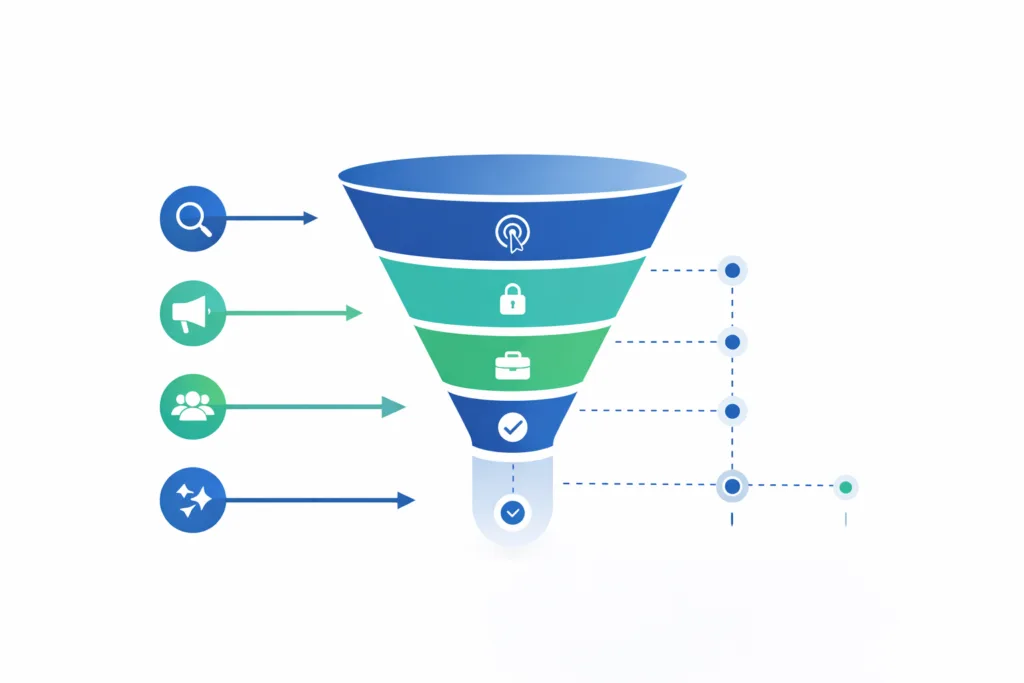
We use a four-part model to turn disconnected marketing activity into measurable pipeline performance.

1. Start with a Performance Diagnostic
We identify measurement gaps, funnel breakdowns, wasted spend, and missed opportunities so decisions start from reality, not assumptions.

2. Align channels to the funnel
We define the job each channel plays across awareness, consideration, conversion, and pipeline quality so every investment has a purpose and a measurable outcome.

3. Run structured testing cycles
We improve performance through repeatable testing across messaging, offers, targeting, landing pages, content, and visibility, so progress is steady instead of random.

4. Report for decisions, not just dashboards
We deliver clear executive reporting on what drove pipeline, what did not, and what we are changing next so leadership can make better decisions with confidence.

Where performance improves
We improve pipeline by fixing the full path from first touch to qualified opportunity
Pipeline rarely breaks in one place. It breaks across handoffs between channels, pages, forms, qualification, follow up, and reporting. We work across that full path so the system produces better leads, better decisions, and more consistent growth.
- Improve lead quality so sales spends less time sorting noise
- Increase conversion rates on the pages that matter most
- Reduce wasted spend caused by weak targeting or unclear offers
- Strengthen search and AI visibility so demand stays more consistent
What changes when the system is in place
Every client starts from a different level of maturity, but strong systems create the same pattern: better decisions, better lead quality, less waste, and more consistent pipeline performance.