Meta Andromeda: Why Creative Velocity Is the New Performance Lever

Meta Andromeda is Meta’s AI-powered ad retrieval engine that selects which ads are eligible to compete for a user’s impression before ranking and auction determine the final ad delivery. Rather than relying primarily on advertiser-defined audience segments, the system evaluates behavioral signals and creative relevance when selecting which ads enter the competition.
In this article, we explain what Meta Andromeda is, how it changes paid social campaigns, and why creative velocity, the consistent production of diverse ad assets, has become the new primary performance lever.
Key Takeaways
- Meta Andromeda prioritizes creative signals over manual targeting, shifting how the platform decides which ads to show and to whom.
- Hyper-segmented campaigns are losing effectiveness as smaller audience pools limit what Meta’s AI can learn and optimize.
- Campaign consolidation speeds up algorithm learning by giving the system larger datasets to work with across broader audiences.
- Creative diversity is now the primary performance input not audience precision or bid strategy.
- Consistent creative production is a structural advantage for brands willing to build it as an ongoing capability.

What Is Meta Andromeda?
Meta Andromeda is Meta’s AI-powered ad retrieval system that determines which ads are eligible to enter the competition for a user’s impression. It filters millions of available ads down to a relevant shortlist, and then Meta’s ranking and auction system determines which ad actually gets shown.
Meta built Andromeda because the old model was breaking down in three specific ways:
- Advertisers were over-segmenting into audiences too small to generate reliable signals
- Manual targeting produced inefficient delivery
- Machine learning performs better with larger datasets than narrowly defined campaigns allow
Rather than relying on advertiser-defined segments, the system now evaluates behavioral signals and creative relevance when selecting which ads enter the competition.
Why Creative Velocity Is the New Performance Lever
Creative velocity is the rate at which advertisers produce and test meaningfully different ad creative. The more variety you feed the system, the more signals Andromeda has to work with. More signals mean stronger candidates entering the auction, and stronger candidates mean better performance.
What Creative Velocity Means in Practice
Creative velocity is not about producing more of the same assets faster. It is about maintaining a consistent supply of meaningfully different creative for the algorithm to evaluate and test.
Creative velocity includes:
- Testing new hooks and messaging angles
- Varying visual formats across placements
- Experimenting with different value propositions
- Launching new creative on a consistent cadence
Why Creative Diversity Improves Performance
More creative inputs give Meta’s AI more material to match against user preferences. The system is looking for signals, and diverse creative generates more of them across more audience segments.
More creative inputs allow Meta’s AI to:
- Match ads to micro-audience preferences it identifies on its own
- Identify winning messaging faster through real-time comparison
- Avoid creative fatigue, which suppresses performance over time
- Discover new conversion opportunities that manual targeting would miss
How Meta Andromeda Changes Paid Social Strategy
Andromeda shifts optimization away from audience logic and toward creative quality. For advertisers, that means two things have to change: how campaigns are structured and where optimization effort actually belongs.
Manual Audience Targeting Is Losing Its Edge
Interest stacking and layered behavioral targeting that once defined strong paid social performance is now working against the algorithm in many cases. AI now handles most audience discovery on its own, which means narrow audience definitions limit what the system can learn rather than improving it.
- Interest stacking is becoming less effective
- Narrow audience definitions limit algorithm learning
- AI now handles most audience discovery
Fewer, Larger Campaigns Perform Better
Consolidating spend into broader campaigns lets the system accumulate data faster, make more accurate predictions, and optimize more efficiently. This is a core principle of any modern paid media strategy.
- Larger audiences give the algorithm more signal
- Larger budgets accelerate the learning phase
- Faster learning shortens the path to performance
- More efficient optimization reduces wasted spend

The Decline of Hyper-Segmented Campaign Structures
For years, the standard paid social playbook rewarded precision. Advertisers built elaborate campaign trees with tightly defined audiences, layered interests, and isolated ad sets. That model made sense when targeting was the primary optimization lever. It no longer is.
The Traditional Paid Social Structure
- Multiple campaigns organized by audience segment
- Multiple ad sets targeting different interests
- Limited creative variations per ad set
- Heavy reliance on manual targeting logic
Why This Model Breaks Under Andromeda
Splitting budget across too many ad sets shrinks the data pool each one receives, slows algorithm learning, and reduces the range of creative the system can test. The segmentation logic that once improved performance now limits it in four specific ways:
- Smaller datasets per ad set limit optimization accuracy
- Slower algorithm learning extends time to performance
- Limited creative testing reduces the system’s ability to find winners
- Reduced system optimization increases cost per result
Is Your Meta Strategy Built for How the Platform Works Today?
Our team diagnoses what is limiting your paid social performance and builds campaigns around creative velocity, consolidation, and AI-driven delivery. Let’s find out what is holding your results back.
What Creative Diversity Actually Looks Like
Creative diversity means producing content that presents genuinely different angles, formats, and motivations. Small tweaks give the algorithm nearly identical inputs. Meaningful variation gives it real options to test.
Examples of Creative Variation
| Creative Type | Example |
| Messaging angle | Problem-focused vs. benefit-focused |
| Visual format | Short video vs. static image |
| Hook or opening | Fear of missing out vs. aspirational outcome |
| Value proposition | Save time vs. save money |
| Audience motivation | New to the product vs. ready to buy |
What Creative Velocity Looks Like for Trustworthy Digital
Here is how we apply this thinking to our own Meta ads. Each leads with a different angle and emotional entry point so Andromeda has genuinely different signals to evaluate.
Ad 1: Problem-focused hook targeting unclear revenue attribution
This ad leads with a pain point marketing leaders recognize immediately. Channels are running, dashboards are full, and leadership still cannot answer basic revenue questions. The hook creates urgency around a problem, not a feature.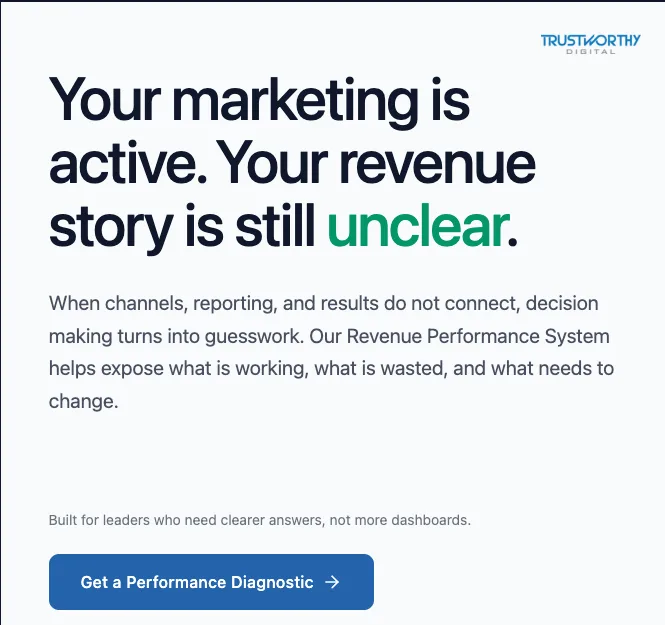
Ad 2: Clarity-focused contrast hook
Same audience, completely different angle. This ad reframes the problem as an abundance issue rather than a capability gap. The subtext, stop mistaking activity for impact, speaks directly to leaders who already have plenty of marketing but not enough visibility into what it is producing.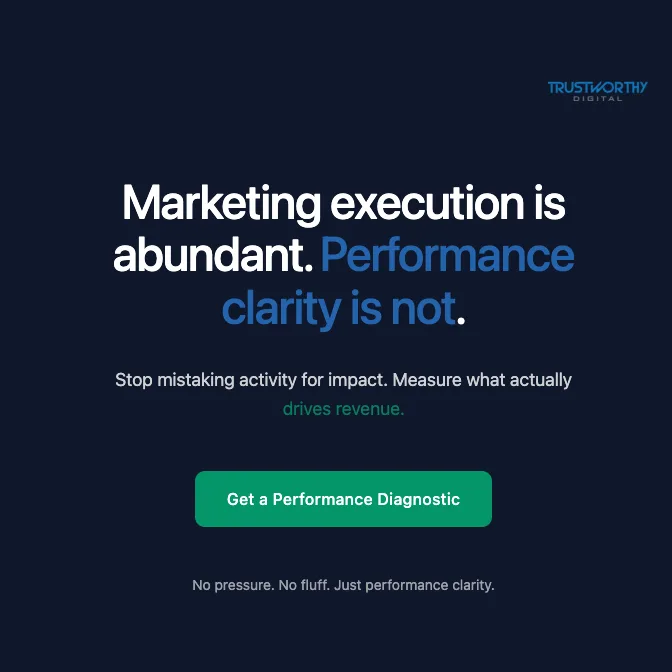
Ad 3: Proof and accountability hook
This ad leads with accountability rather than pain or contrast. It targets leaders who are already under pressure to justify spend and connects budget to measurable revenue outcomes. Different motivation, different emotional trigger, same audience.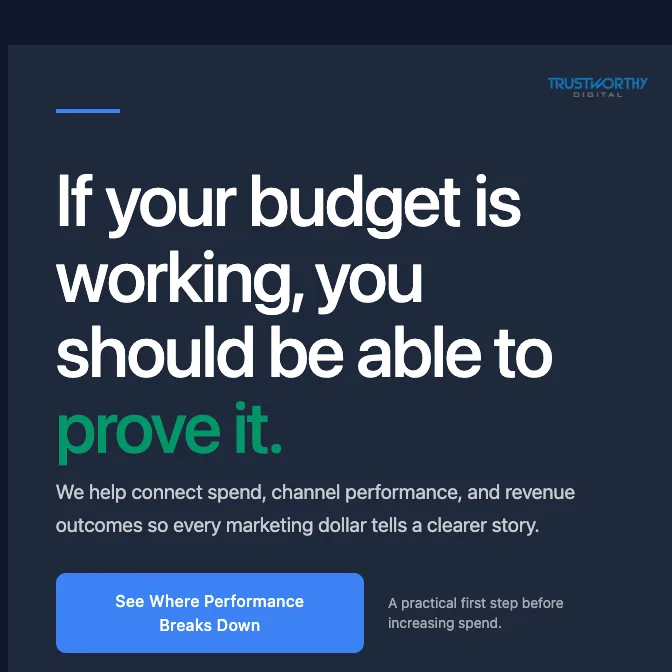
Ad 4: Executive audience hook
This ad narrows the angle to a specific high-stakes moment, the board meeting. It speaks directly to CMOs and marketing leaders who need to show revenue impact, not activity. The format and tone shift entirely toward executive pressure.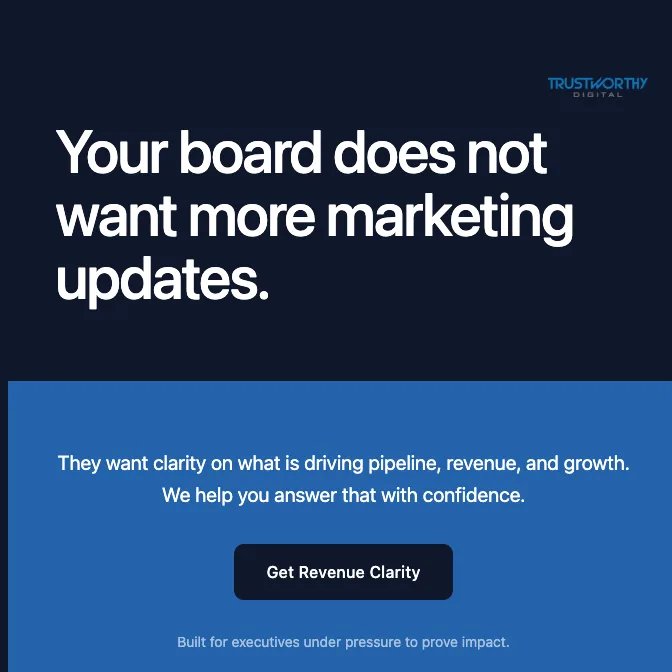
Four ads. Four different hooks. One audience.
That is creative velocity working the way Andromeda is designed to reward it.
How to Structure Campaigns for the Andromeda Era
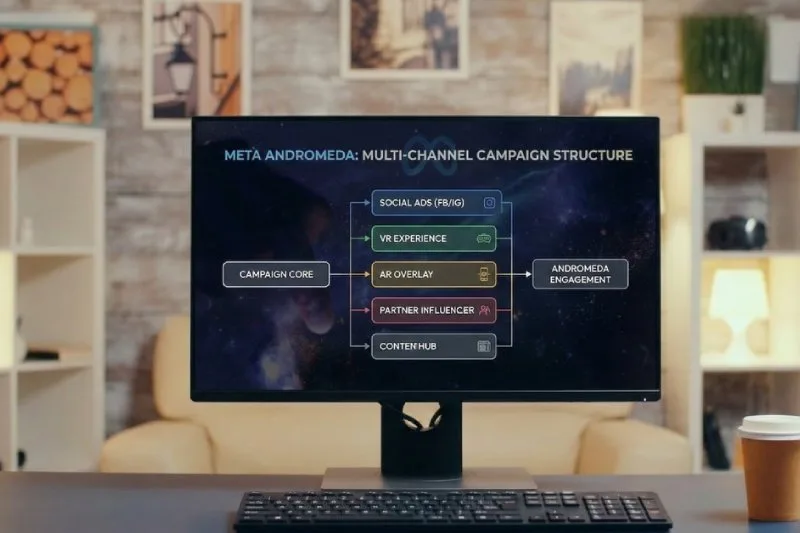
Campaign structure under Andromeda should be built around consolidation and creative volume, not audience precision. The goal is to give Meta’s AI broad access to budget and data, then fuel it with enough creative variety to find what converts.
Example of Modern Campaign Structure
Consolidation is the foundation of a modern Meta campaign setup. Fewer, larger campaigns give the algorithm more data to work with, and more creative volume gives it more to test.
| Campaign Component | Best Practice |
| Campaigns | 1-3 consolidated campaigns |
| Ad sets | Broad targeting |
| Creative | 10-20+ ad variations |
| Testing cycle | Weekly creative refresh |
This is the structure our Meta ads services team builds for clients who want to compete in the current platform environment, not the one from three years ago.
5 Common Mistakes Advertisers Are Still Making
Most advertisers struggling with Meta performance are not losing because of budget. They are losing because their campaign structure and creative approach are built for a system that no longer exists.
Creative velocity is about volume and variety, not changing everything at once. The goal is to ship more meaningfully different ads, not to swap hooks, formats, value propositions, and visuals all in the same test cycle. With that in mind, here are the five mistakes that consistently limit performance:
- Over-segmenting audiences into pools too small for the algorithm to learn from
- Running too few creative assets, which limits what the system can test
- Making minor creative tweaks instead of producing meaningfully different variations
- Killing ads before the algorithm finishes the learning phase
- Testing too many variables simultaneously rather than isolating one element per cycle, which makes it impossible to know what actually drove the result
How Andromeda Handles Complex Accounts
Andromeda changes the rules for complex accounts too, not just straightforward single-offer campaigns. Here is how two common scenarios fit into the new system.
Retargeting, Offline Conversions, and First-Party Data
First-party data and offline conversion signals are more valuable under Andromeda, not less. The system uses these signals during retrieval to identify the most relevant ads for users who have already interacted with your brand.
Feed these inputs into Meta to strengthen retrieval accuracy:
- Clean CRM data and customer lists
- Offline conversion events
- Website and app activity signals
- Previous purchase or lead data
Multiple Products or Services
Running multiple offers does not require returning to a hyper-segmented structure. Consolidate at the campaign level and let creative do the differentiation work.
- Build distinct creative sets for each product or audience motivation
- Let Andromeda determine which creative is most relevant to which user
- Avoid splitting campaigns by offer, the system is designed to handle variety
- Broad campaigns with diverse creative typically outperform segmented ones even across multiple offers
How to Build a Creative Testing Engine
The biggest operational challenge with creative velocity is consistency. Producing 10 to 20 variations for launch is manageable, but refreshing creative every week while maintaining quality and strategic alignment requires a repeatable process, not just effort.
4 Steps to Build a Creative Testing System
Most brands skip one or more of these steps, which is why their creative output stalls after the first few weeks.
- Set a production cadence. Decide how many new creative variations ship each week and treat it like a publishing schedule. Without a cadence, creative refresh happens reactively instead of consistently.
- Build a brief template tied to performance data. Each new round of creative should be informed by what the previous round showed. Winning angles get pushed further, losing ones get replaced with a different approach.
- Analyze by angle and format, not just cost. Cost per result tells you what won. Angle and format analysis tells you why, which is what feeds the next brief.
- Iterate based on what the data actually shows. Small, focused changes based on real signals produce better learning than overhauling everything at once. Change one variable, measure it, then move to the next.
Creative Velocity Inside a Revenue Performance System
Creative testing does not work in isolation. The brands getting the most out of Andromeda treat Meta as one channel inside a connected revenue performance system, not a standalone tactic.
That means creative decisions are informed by:
- Pipeline data and conversion quality
- What is actually driving revenue, not just in-platform metrics
- How paid social connects to the rest of the marketing system
When those inputs are aligned, creative velocity becomes a growth lever rather than a production exercise.
Why Creative Production Is Now a Strategic Capability
Paid performance increasingly depends on creative supply. Brands that treat creative as a one-time launch asset will lose ground to brands that treat it as an ongoing production system.
Three reasons creative production is now a strategic priority:
- The algorithm rewards variety and freshness over time
- Creative fatigue sets in faster than most teams plan for
- Building production capacity consistently compounds performance gains
For teams running full-funnel advertising, creative velocity needs to be built into the process at every stage, from awareness through conversion.
Frequently Asked Questions
What is Meta Andromeda?
Does Meta Andromeda replace audience targeting?
How many ad creatives should a campaign have?
Does creative diversity improve ROAS?
Winning Paid Social in the Andromeda Era
Meta’s AI is now doing the audience work. The variable advertisers still control, and the one that moves performance most, is creative. Brands that build a consistent production and testing capability will outperform competitors still relying on audience segmentation and manual optimization logic. The platform has changed. The strategy needs to match it.
Is Your Meta Performance Connected to Your Pipeline?
Creative velocity is one part of a revenue performance system. If your campaigns have hit a ceiling, the issue is rarely just creative. Our team diagnoses where paid social is breaking down and builds the system to fix it.
About the Author: Brandon O'Connor
Brandon founded Trustworthy Digital driven with a passion for transparent, data-driven marketing. Leveraging his extensive eCommerce and digital marketing expertise, Brandon guides the strategic direction, ensuring client success and ethical business practices are at the core of everything we do.
View all posts →