
13 AEO & SEO Examples to Inspire Your 2026 Strategy
Search engine optimization evolves constantly, and what worked yesterday might not deliver results tomorrow. The brands leading in organic search today aren’t just following best practices; they’re pioneering strategies that balance traditional SEO fundamentals with emerging technologies like AI-powered search and answer engines.
This guide breaks down 13 real-world SEO examples from companies getting it right in 2026. Each demonstrates a specific tactic you can adapt for your own strategy, whether you’re optimizing product pages, building authority, or preparing for the AI search revolution.
Key Takeaways
- Product page optimization drives conversions – when keywords appear naturally in URLs, headings, and descriptions rather than being stuffed into content.
- Schema markup transforms search listings – into rich results with star ratings, pricing, and availability details that increase click-through rates by up to 82%.
- Page speed directly impacts revenue – with sites loading in under 2 seconds converting 3x better than those taking 5 seconds to load.
- Zero-click optimization positions content – to answer questions directly in search results, capturing visibility even when users don’t click through.
- Local SEO multiplies reach – for multi-location businesses through optimized Google Business Profiles and location-specific landing pages.
13 SEO Examples That Show What Works in 2026
The search landscape now demands excellence across multiple fronts. Traditional ranking factors like keywords and backlinks remain critical, but answer engine optimization (AEO) tactics, AI visibility strategies, and user experience elements increasingly determine who dominates the SERPs. These SEO examples show how leading brands nail specific aspects of modern search visibility.
1. Keyword Optimization: Patagonia
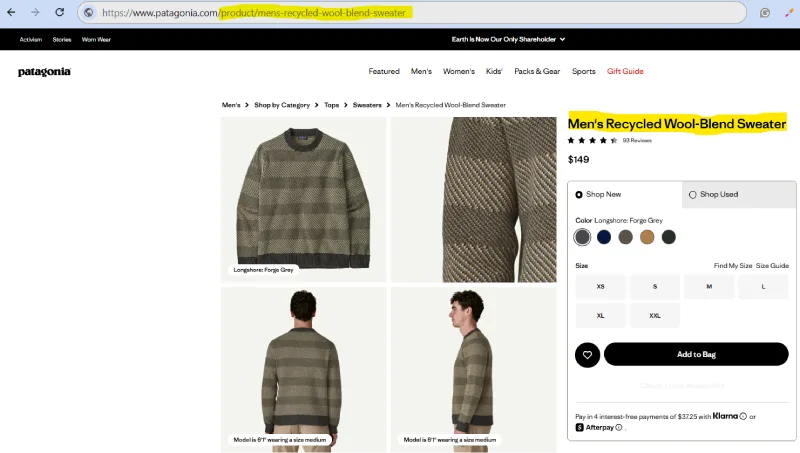
Patagonia’s product pages demonstrate strategic keyword integration without sacrificing user experience or brand voice. Their approach prioritizes natural language that serves both search engines and customers focused on sustainability.
URL Structure & On-Page Keywords
The outdoor retailer structures product URLs with clear, keyword-rich paths like patagonia.com/product/mens-better-sweater-fleece-jacket. Product names appear in page titles, H1 headings, and throughout descriptions in variations that match actual search behavior.
Natural Keyword Integration
What sets Patagonia apart is how they weave sustainability keywords naturally into product content. A fleece jacket description doesn’t just target “men’s fleece jacket”, it integrates terms like “recycled wool-blend sweater” and “Fair Trade Certified” that align with how their audience actually searches. This mirrors effective content strategy principles that prioritize user intent over keyword density.
Authority Metrics
With an Authority Domain Ranking of 76 and over 5.6 million backlinks, their keyword strategy works because it reflects genuine brand values rather than chasing arbitrary search volume.
Pro SEO Tips
- Structure URLs with clear keyword hierarchy (category/subcategory/product-name)
- Include primary keywords in H1 tags and naturally in the first 100 words
- Target long-tail variations that match your audience’s specific search intent
- Avoid keyword stuffing by writing for humans first, search engines second
2. Schema Markup: REI
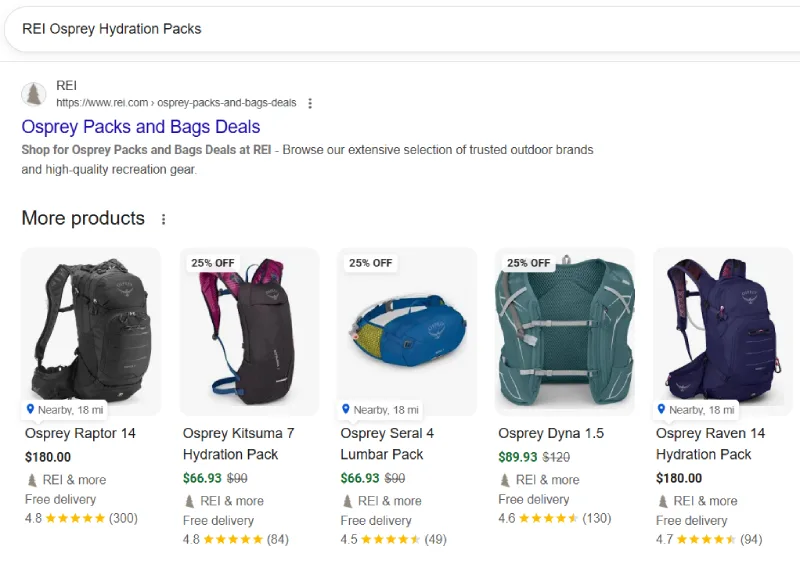
REI’s implementation of Product schema transforms their search listings into information-rich snippets that outperform competitors. Their product pages include comprehensive structured data covering price, availability, ratings, specifications, and brand information.
Rich Snippet Implementation
When you search for outdoor gear, REI’s results stand out with star ratings, exact pricing, and key product attributes like weight, best use, and material composition visible directly in search results. This Product schema implementation qualifies them for Google’s merchant listing experiences and product carousels.
Multi-Schema Approach
REI also layers in Organization schema with business details, breadcrumb navigation schema for improved site structure visibility, and LocalBusiness schema for their retail locations. This multi-schema approach helps search engines and AI platforms understand the full context of their business and products.
Impact on Traffic Quality
The result is rich snippets that provide searchers with decision-making information before they even click, improving qualified traffic and reducing bounce rates from mismatched expectations. Regular SEO audits help identify schema implementation gaps.
Pro SEO Tips
- Implement Product schema with required fields: name, image, description, offers (price/availability)
- Add AggregateRating schema to display star ratings in search results
- Use Breadcrumb schema to control how navigation paths appear in SERPs
- Validate implementation with Google’s Rich Results Test tool before deployment
3. UX & Page Design: Trello
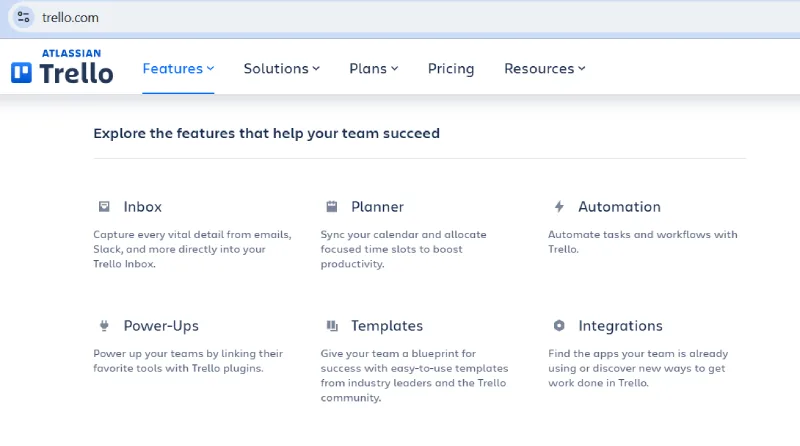
Trello’s website exemplifies how clean design, intuitive navigation, and fast-loading interfaces support SEO performance. Their card-based approach prioritizes user experience while maintaining technical excellence.
Visual Hierarchy & Navigation
The project management platform uses clear visual content hierarchy with its signature card system, making content scannable and reducing cognitive load. Navigation is straightforward with logical category groupings, and internal links use descriptive anchor text that helps both users and search engines understand page relationships.
Mobile-First Performance
Mobile responsiveness is flawless across devices, critical since Google’s mobile-first indexing makes mobile experience the primary ranking signal. Pages load quickly despite rich visual content through optimized images, lazy loading, and efficient code.
Core Web Vitals Excellence
Trello’s design proves that aesthetic appeal and SEO performance aren’t mutually exclusive. Their Core Web Vitals scores remain exceptional, with Largest Contentful Paint under 1 second, excellent layout stability, and fast interactivity. Industry benchmarks in 2025 recognize Trello as a SaaS leader in both user experience and technical speed optimization.
Pro SEO Tips
- Ensure mobile-first responsive design across all screen sizes
- Optimize images with compression and modern formats (WebP, AVIF)
- Use clear heading hierarchy (H1, H2, H3) for content structure
- Implement lazy loading for below-the-fold images and videos
4. Page Speed: Amazon
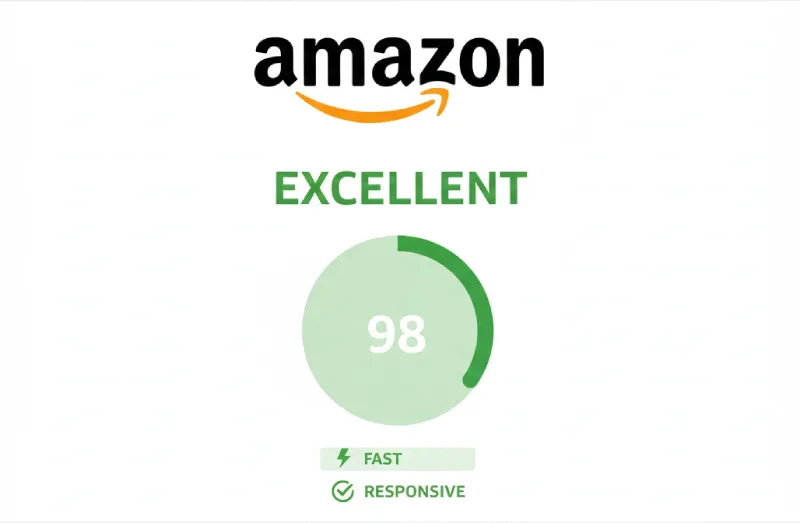
Amazon obsesses over page speed because they know milliseconds impact revenue. Their testing revealed that every 100ms of latency costs them 1% in sales, driving relentless optimization across their platform.
Infrastructure & Optimization
The ecommerce giant achieves fast load times through aggressive caching, content delivery networks (CDNs) with global edge locations, optimized images served in multiple formats based on device capability, and streamlined code that eliminates unnecessary scripts.
Core Web Vitals Focus
Amazon prioritizes Core Web Vitals metrics, particularly Largest Contentful Paint (LCP) and Interaction to Next Paint (INP). Product pages load critical content first, then progressively enhance with additional elements so users can begin interacting immediately.
Scale Without Compromise
Their approach demonstrates that scale doesn’t excuse slow performance. Even with millions of product pages and complex functionality, Amazon maintains speed through infrastructure investment and technical discipline.
Pro SEO Tips
- Use Google PageSpeed Insights and Core Web Vitals reports to identify bottlenecks
- Implement a CDN to reduce server response times globally
- Compress images and use next-gen formats (WebP for browsers that support it)
- Minimize JavaScript execution time and eliminate render-blocking resources
5. Backlinks & Authority Building: HubSpot
HubSpot’s backlink profile demonstrates how creating genuinely useful resources attracts natural links at scale. Their strategy centers on proprietary tools, original research, and comprehensive guides that become industry references.
Free Tools as Link Magnets
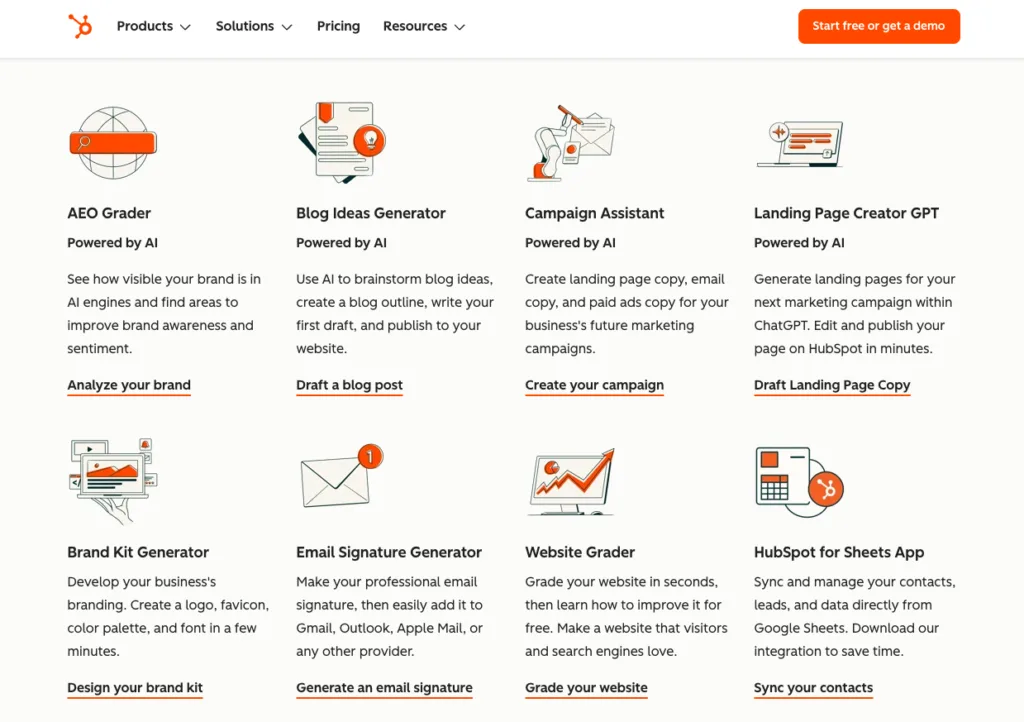
The company offers free tools like Website Grader, Email Signature Generator, and Marketing Plan Generator that solve real problems for their audience. These tools generate thousands of backlinks as users share them and publishers reference them in articles.
Original Research & Data
HubSpot’s annual State of Marketing reports provide original data that journalists, researchers, and marketers cite extensively. This approach to linkable assets means they earn authoritative backlinks from high-domain-authority sites rather than pursuing them through outreach. This demonstrates why hiring a marketing agency with resources for original research pays dividends.
Content as Reference Material
Their blog content targets question-based keywords with comprehensive answers, positioning individual articles as definitive resources that accumulate links over time. Template libraries, toolkits, and worksheets serve as additional link magnets.
Pro SEO Tips
- Create interactive tools or calculators that provide immediate value
- Publish original research and data that serves as citable sources
- Develop comprehensive guides that become bookmarked references
- Focus on earning links through value creation rather than link-building campaigns
6. Site Navigation & Internal Linking: Wayfair
Wayfair manages a massive product catalog with exceptional navigation architecture that keeps both users and search crawlers oriented. Their multi-layered taxonomy demonstrates how to structure complex ecommerce sites.
Clear Category Hierarchy
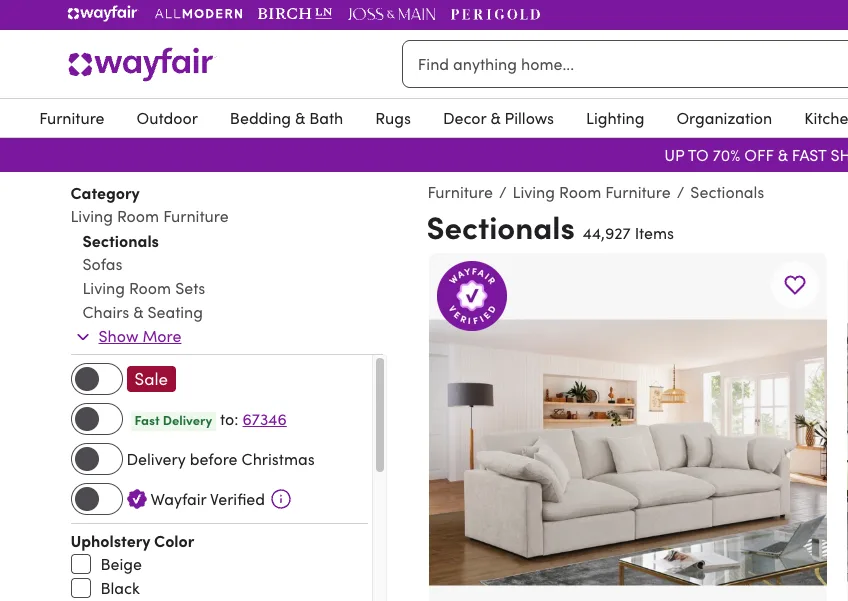
The furniture retailer uses clear category hierarchies visible through breadcrumb navigation: Home > Living Room Furniture > Sofas > Sectional Sofas. This structure helps users understand their location while distributing link equity efficiently through the site.
Strategic Internal Links
Internal linking on Wayfair goes beyond basic navigation. Product pages link to related items, style guides, and buying guides. Category pages include contextual links to subcategories and featured collections. Blog content links strategically to relevant product categories.
Crawlability & UX Balance
Their approach ensures no page sits more than three clicks from the homepage, improving crawlability and user experience simultaneously. Descriptive anchor text in internal links provides context about destination pages for both users and search engines.
Pro SEO Tips
- Implement breadcrumb navigation and add BreadcrumbList schema
- Keep important pages within 3 clicks of the homepage
- Use descriptive anchor text that indicates what users will find on the destination page
- Create topic clusters with pillar pages linking to related subtopic pages
7. EEAT Enhancements: Healthline
Healthline’s content strategy showcases how medical and healthcare sites establish Expertise, Experience, Authority, and Trust (EEAT) through transparent author credentials and rigorous editorial standards.
Author Credentials & Transparency
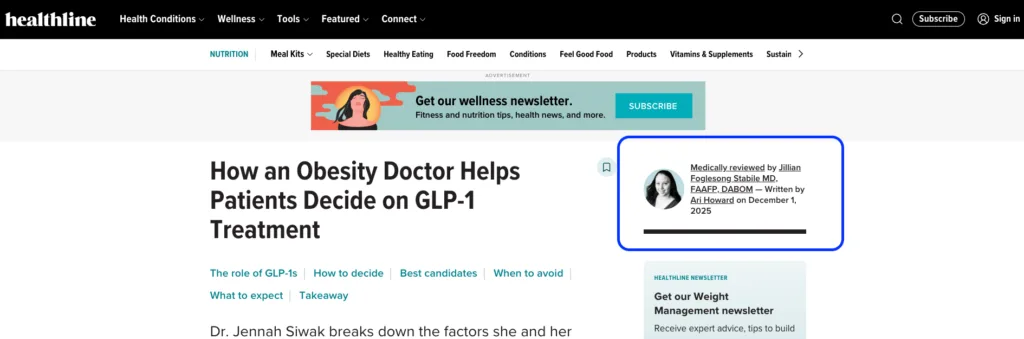
Every health article displays detailed author information including credentials (MD, PhD, RN), specializations, years of experience, and current role. This transparency signals expertise and builds reader trust, particularly critical in Your Money or Your Life (YMYL) content areas.
Medical Review Process
Articles undergo medical review by board-certified physicians in relevant specialties, with reviewer credentials also prominently displayed. Editorial processes include fact-checking against peer-reviewed research and regular content audits to ensure information remains current. Their approach mirrors best practices in AI and content marketing.
Market Leadership
With approximately 96 million monthly visits and over 2.2 million keywords ranked in Google’s top 10, Healthline has surpassed competitors in both traffic and credibility as of 2025. Their robust trust signals and consistent updates demonstrate the power of prioritizing EEAT in health content.
Pro SEO Tips
- Display author credentials prominently on all content pages
- Implement Author schema markup to help search engines understand contributor expertise
- Link to author bio pages with detailed qualifications and published work
- Include last-updated dates and editorial review processes for health/finance content
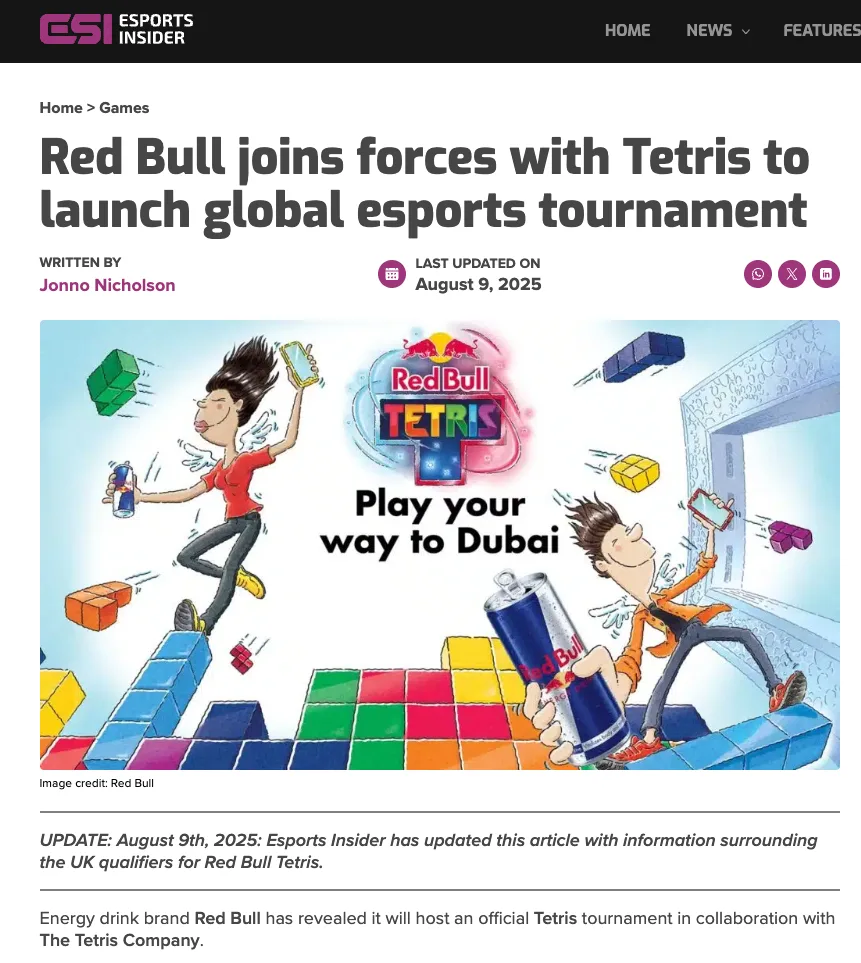
8. Off-Site Signals: Red Bull
Red Bull’s brand strength extends far beyond their website through bold event marketing, global media coverage, and authentic community engagement that generates powerful off-site authority signals.
Earned Media & Brand Mentions
The energy drink company’s high-profile events, like the Red Bull Stratos space jump,p generated unprecedented earned media coverage. Felix Baumgartner’s record-breaking freefall created thousands of backlinks from major news outlets, scientific publications, and media sites worldwide. Their Formula 1 racing teams, extreme sports sponsorships, and athlete partnerships keep Red Bull consistently mentioned across authoritative sports and entertainment publications.
Authentic Social Presence
Social media presence focuses on user-generated content from athletes, events, and community members rather than product promotion. Red Bull’s Instagram, YouTube, and TikTok channels showcase authentic extreme sports content, building massive engaged audiences that amplify brand visibility and create natural social signals.
Multi-Channel Authority
Red Bull Media House produces original content across multiple platforms, from documentary films to digital series. Sports sponsorships spanning F1, soccer, motocross, and action sports create continuous brand mentions. Consistent NAP (Name, Address, Phone) citations across directories, event listings, and local business profiles reinforce trust signals that influence search rankings and overall brand authority.
Pro SEO Tips
- Monitor brand mentions using tools like Google Alerts or Mention
- Pursue bold earned media through newsworthy events and partnerships
- Maintain consistent NAP information across all directories and citations
- Engage with authentic, community-first social content rather than promotional messaging
9. Local SEO: Domino’s Pizza
Domino’s Pizza optimizes for thousands of locations through comprehensive Google Business Profile management and location-specific landing pages that capture local search traffic at scale.
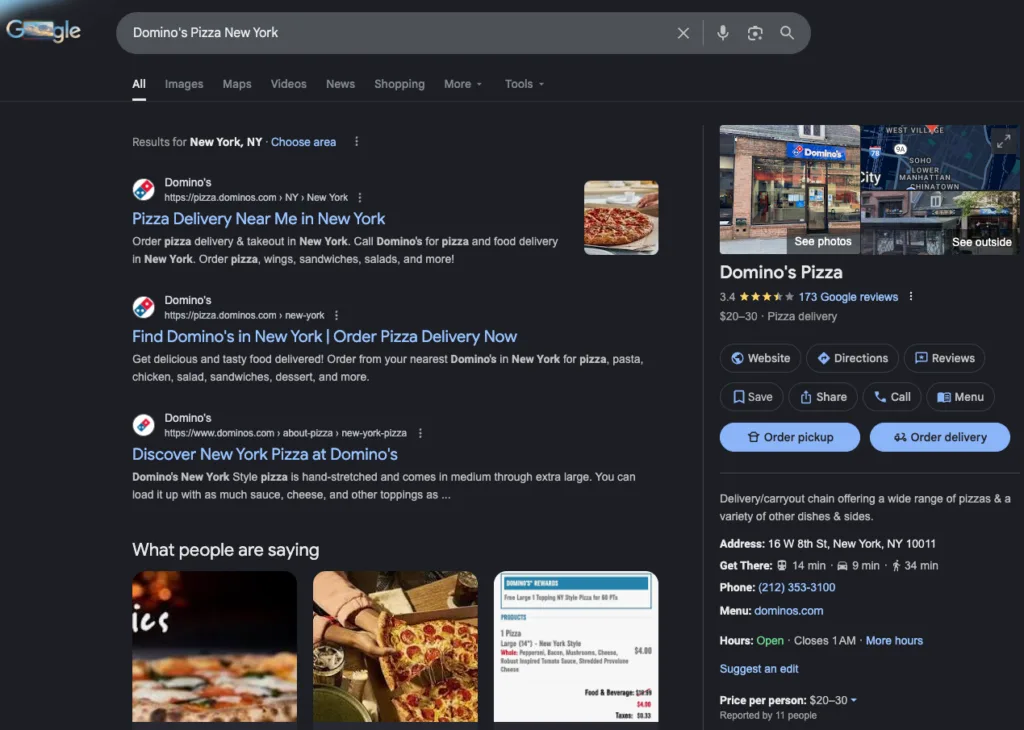
Google Business Profile Optimization
Each restaurant location has a fully optimized GBP, including accurate business hours, menu links, photos, posts about promotions, and responses to customer reviews. This attention to detail helps individual stores rank in local pack results for searches like “pizza near me.”
Location-Specific Landing Pages
Location pages on dominos.com follow a consistent template while incorporating unique local elements. Each includes the specific store address, phone number, hours, embedded Google Map, and unique content about serving the local community. Their approach demonstrates effective local SEO at enterprise scale.
Structured Data Implementation
The pizza chain also implements LocalBusiness schema with location-specific details, ensuring search engines can distinguish between individual franchises. Consistent citations across local directories reinforce location data accuracy.
Pro SEO Tips
- Claim and fully optimize Google Business Profiles for all locations
- Create unique location landing pages with distinct local content (not duplicates)
- Ensure consistent NAP information across the website, GBP, and directory listings
- Encourage and respond to customer reviews on Google Business Profiles
10. Zero-Click Optimization: The Spruce
The Spruce dominates featured snippets and answer boxes by structuring content specifically for zero-click results while maintaining click-worthy depth.
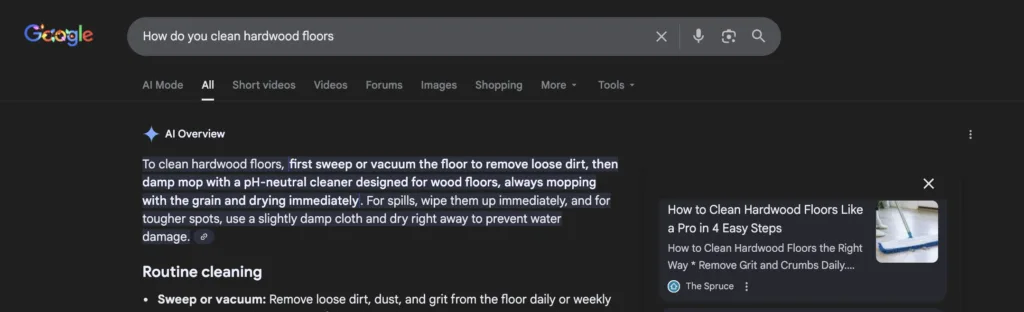
Snippet-Friendly Content Structure
The home and lifestyle site formats answers to common how-to questions with clear, concise definitions in the first paragraph. These snippet-friendly summaries directly answer the query before expanding into comprehensive detail below.
Question-Based Architecture
Content structure uses question-based H2 subheadings that match actual search queries (“How do you clean hardwood floors?” “What’s the best way to remove stains?”). Bulleted lists, numbered steps, and tables make information easy for Google to extract and display. This represents advanced answer engine optimization in practice.
FAQ Schema & PAA Boxes
FAQ schema markup on relevant pages helps The Spruce appear in People Also Ask boxes. While zero-click results mean users might not visit the site, the brand visibility and trust building from appearing in featured positions drive overall brand recognition and direct traffic.
Pro SEO Tips
- Lead sections with concise, direct answers to the heading’s question
- Use question-based subheadings (H2, H3) that match search queries
- Format content with lists, tables, and clear structures that are easy to extract
- Implement FAQ schema for pages answering multiple related questions
11. Content Cluster Strategy: Zapier
Zapier demonstrates how programmatic content creation and topic clusters build topical authority at a massive scale. Their integration-based landing pages and interlinked content hubs position them as the automation authority.
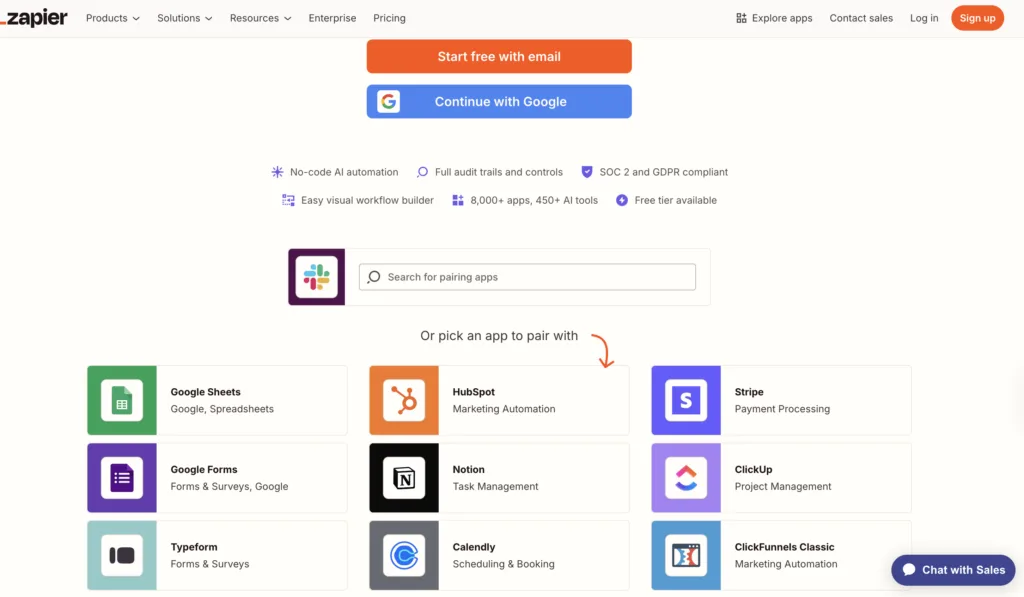
Programmatic Page Structure
With over 50,000 pages targeting millions of keywords, Zapier creates dedicated landing pages for every integration combination. Each page follows a consistent template while providing unique value through specific use cases, setup instructions, and integration details.
Topical Authority Through Interlinking
These pages interconnect strategically, creating content clusters around specific tools, workflows, and automation scenarios. A page about “Slack integrations” links to dozens of specific integration pages, while those individual pages link back to broader hub pages and related integrations.
Scalable SEO Results
This programmatic approach drives over 5 million monthly organic visits. The strategy proves that topic clusters can scale beyond traditional pillar-post models when you have a systematic content framework and clear topical relationships.
Pro SEO Tips
- Create hub pages for broad topics and link to detailed subtopic pages
- Develop consistent templates for programmatic content at scale
- Ensure each page provides unique value despite following a template
- Build bidirectional links between related content to strengthen topical signals
12. User-Generated Content: TripAdvisor
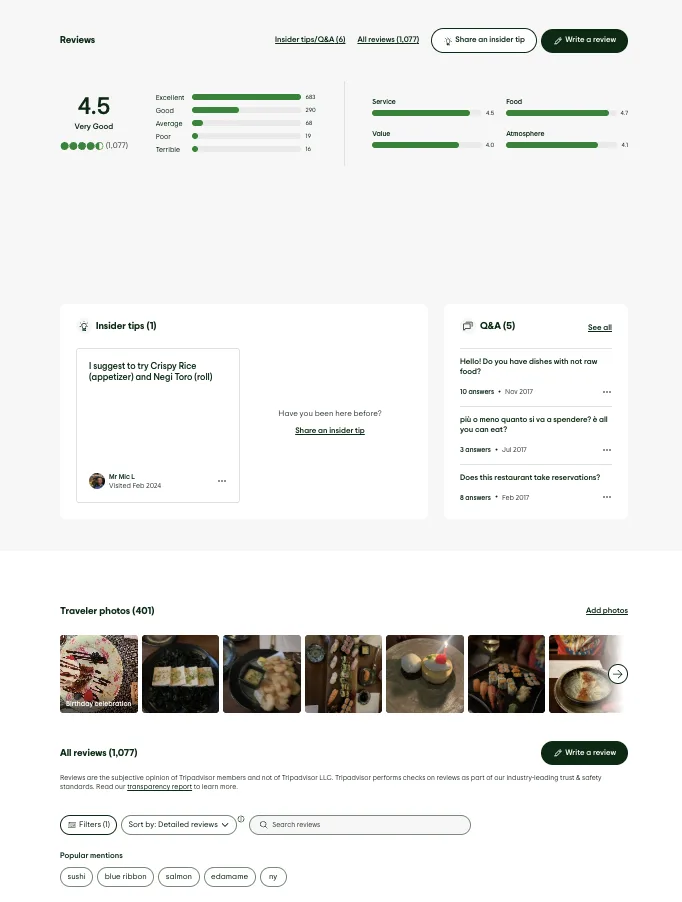
Tripadvisor leverages user reviews, Q&A, and constantly updated listings to power SEO for local and experience-based searches. Their UGC strategy keeps content fresh and relevant despite the rise of AI search.
Review-Powered Freshness
User-generated reviews provide continuous content updates across millions of listings. Each new review adds fresh, keyword-rich content that search engines value, while answering real questions travelers have about hotels, restaurants, and attractions.
Community-Driven Q&A
The platform’s Q&A feature lets users ask specific questions about locations, with community members providing answers. This creates naturally conversational, long-tail content that matches how people search for travel information. This authentic content performs well when it comes to AI search optimization.
Resilience in AI Era
Despite shifts toward AI-generated answers, Tripadvisor maintains approximately 2.6 million ranking keywords with 68% of traffic from organic search. Fresh, real-world user content keeps it strong in the evolving search landscape by providing authentic experiences AI can’t replicate.
Pro SEO Tips
- Enable and encourage user reviews on product or location pages
- Implement Q&A features that capture long-tail search queries
- Moderate UGC for quality while maintaining authentic voice
- Use Review schema markup to display star ratings in search results
13. Video Content + Transcripts: Wistia
Wistia optimizes video content for search through comprehensive transcripts, video schema implementation, and strategic embedding that drives both discovery and engagement.
Full Transcript Integration
Every video includes a full, accurate transcript displayed on the page, making content accessible to search engines that can’t watch videos. These transcripts target keyword variations while providing accessibility for users who prefer reading or need accommodations.
VideoObject Schema
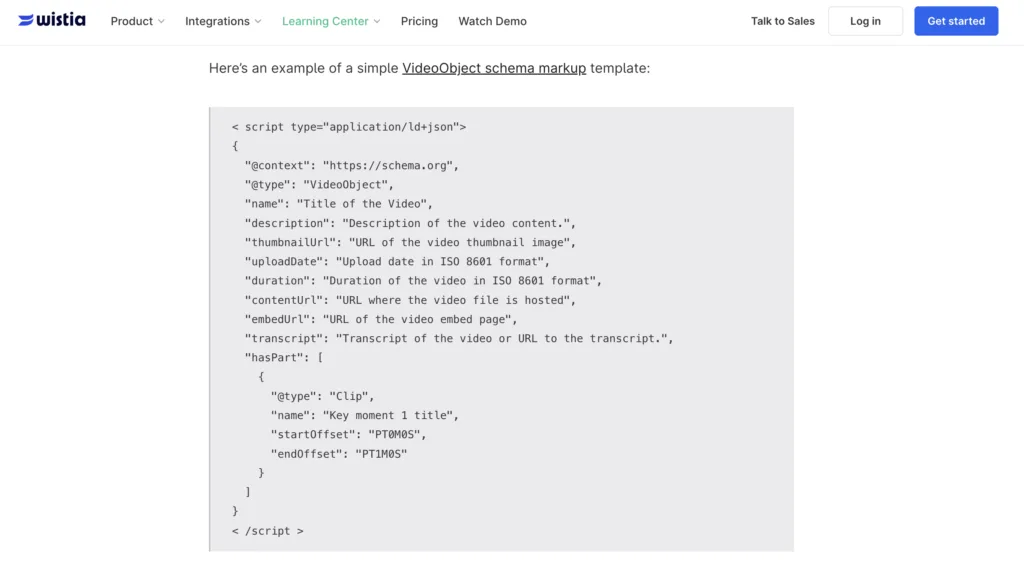
The video marketing platform implements VideoObject schema with detailed metadata, including upload date, duration, description, thumbnail URL, and transcript URL. This structured data helps videos appear in video carousels and rich results.
Strategic Hosting & Distribution
Video embeds include optimized titles, descriptions, and tags. Related videos link contextually within content, keeping users engaged while distributing link equity to multiple pages. Hosting videos on their own domain rather than solely on YouTube maintains control over the viewing experience and tracking.
Pro SEO Tips
- Provide accurate, full transcripts for all video content
- Implement VideoObject schema with complete metadata
- Optimize video titles and descriptions with target keywords
- Host key videos on your domain while also distributing to YouTube for discovery
Apply These SEO Examples to Level Up Your AEO Strategy
These 13 SEO examples prove that successful search optimization in 2026 requires technical precision, genuine user value, and AI optimization working together. Start by auditing your current approach against these examples, identifying gaps like missing schema markup, slow page speed, or lack of original data.
Need help implementing these strategies for your business? Our team specializes in creating data-driven SEO and AEO strategies that deliver measurable results. Book an SEO briefing to start the conversation.