

Traditional analytics are great at telling us how someone reached a website and what they did once they got there. But there’s a growing part of the content journey those reports don’t clearly show.
Your content can be cited in an AI response, shared on social media, or sent to someone in a text message without ever generating a website session. That doesn’t mean the content isn’t working. It means we’re missing part of its influence.
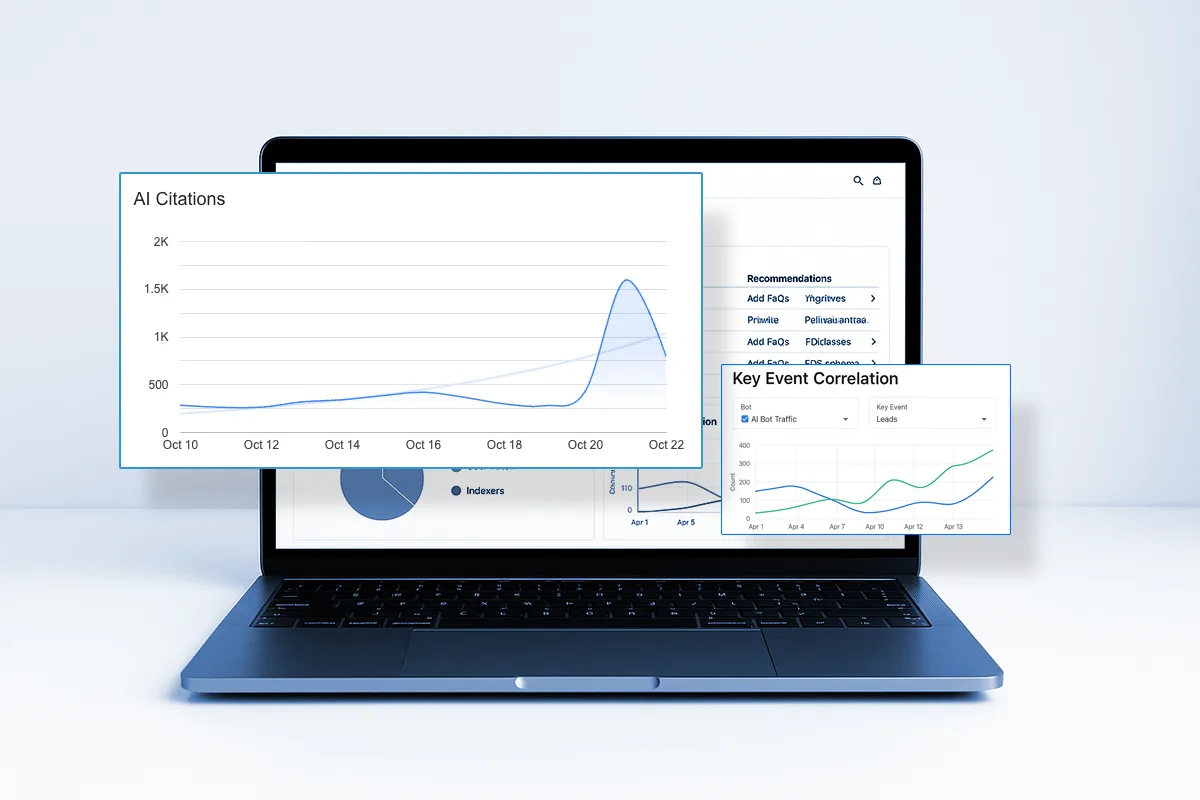
That’s the gap we built Trustworthy Signals™ to help uncover. It gives us another layer of visibility into which pages are being consumed and shared across off-site channels, then lets us compare that activity with branded search and lead performance.
One trend I’ve noticed reviewing Trustworthy Signals data is that your highest-impact content often isn’t your highest-traffic content.
And that’s where things get interesting for content strategy. In this guide, I’ll walk through how I use these signals to find the content already earning attention, identify topics worth investing in, and make smarter decisions about what to create or optimize next.
Why your content strategy needs more than traffic data
Traffic data remains important, but it doesn’t capture every place your content influences discovery.
Traditional metrics tell us how content performs in search and what happens once someone reaches the website. Off-site signals help answer a different question: Where is our content showing up when people interact with it somewhere else?
| Traditional content metrics | Off-site content signals |
| Organic sessions | AI references |
| Search impressions | AI citations |
| Rankings | Social sharing |
| Engagement | SMS / private sharing |
| Conversions | Off-site content consumption |
These aren’t replacement metrics. I still care about rankings, traffic, engagement, and conversions. A lot.
The difference is that off-site signals give us another layer of context. When we combine them with traditional analytics and attribution, we get a more complete picture of how content contributes to discovery, brand visibility, and eventually, business outcomes.
For example, an article with modest organic traffic may look like a lower-priority asset in a traditional content report. If that same article is consistently being referenced by AI platforms or shared through private channels, suddenly we have a very different reason to pay attention to it.
Your blog may be doing more work than you think
When I look at the pages generating the most off-site signals for our clients, blog content consistently stands out.
And when you think about how people use AI assistants, that makes sense. They aren’t only asking for a company recommendation. They’re asking questions, comparing options, researching problems, and trying to understand complex topics before they’re ready to make a decision.
Educational content gives AI platforms something useful to work with. A strong article can provide the explanations, comparisons, processes, definitions, and expertise needed to build an answer, while introducing your brand as a credible source along the way.
That’s why I wouldn’t interpret the rise of zero-click search as a reason to invest less in your blog. If anything, it changes how we should evaluate what a successful blog post looks like.
An article doesn’t necessarily need to earn a click to create value. If your content is helping shape the answers your audience receives, your blog is still doing its job. We just need better ways to see it.
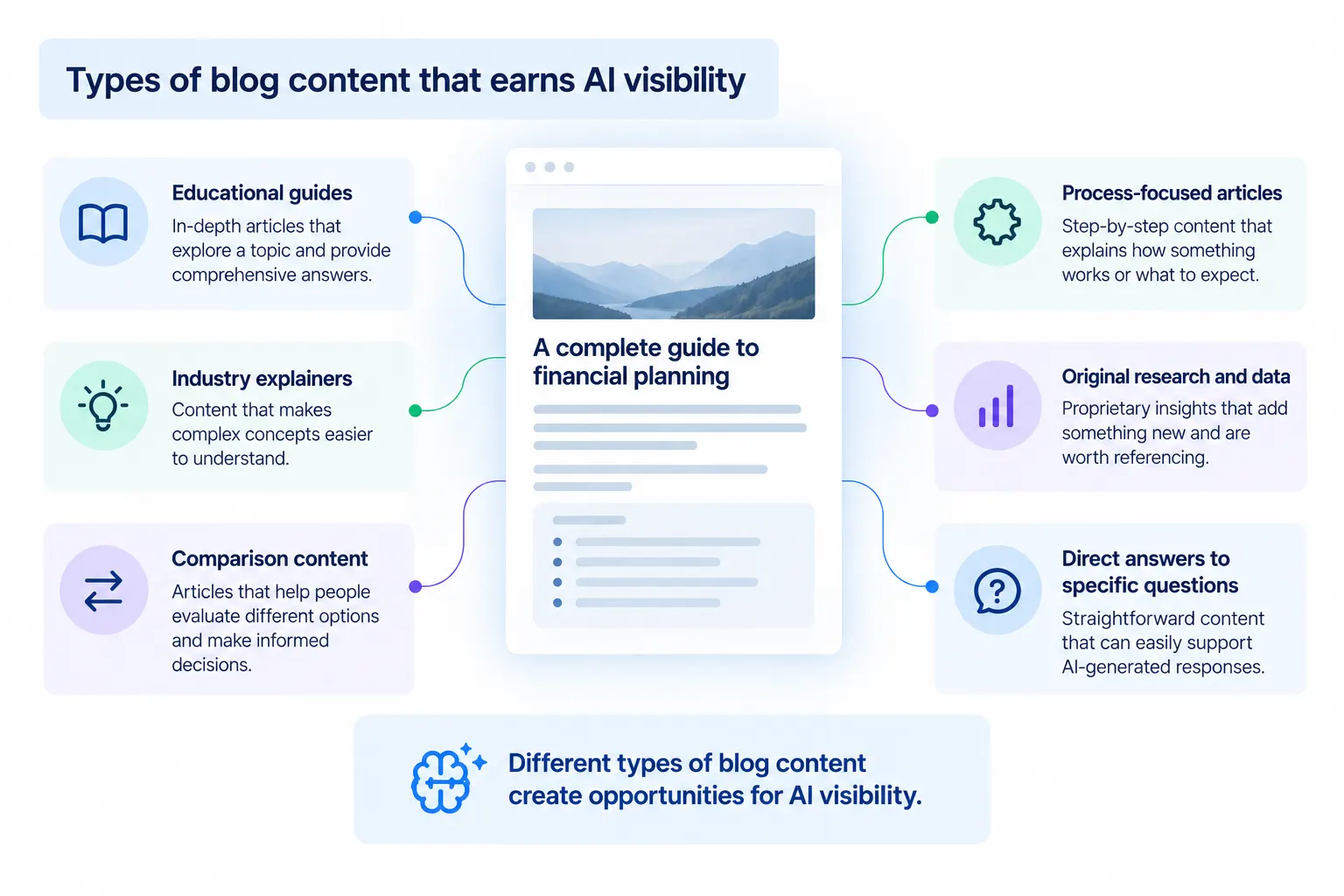
Why educational content earns off-site visibility
Educational content tends to earn off-site visibility because it answers the types of questions people are already bringing to AI assistants, search engines, and their own networks.
In our client data, that often includes:
- Educational guides that explore a topic in depth
- Industry explainers that make complex concepts easier to understand
- Comparison content that helps people evaluate different options
- Process-focused articles that explain how something works or what to expect
- Original research and data that adds something worth referencing
- Direct answers to specific questions that can easily support a larger AI-generated response
This is where your blog and commercial content play different roles. A service page may be closer to conversion and better positioned to capture existing demand, but a blog article can introduce your expertise much earlier in the research process.
That early influence matters. If your educational content consistently helps answer the questions your audience is asking, you’re building familiarity and authority before that person ever reaches the point of comparing providers.
How to use Trustworthy Signals to improve your content strategy
Seeing which content earns off-site visibility is interesting. Knowing what to do with that information is where it becomes useful.
I use Trustworthy Signals™ to look for patterns across individual pages, topics, and channels, then compare those insights with the performance data we already have. From there, we can make more informed decisions about what content to expand, refresh, connect, or create next.
1. Find the content already earning off-site visibility
I usually start with the Path Report, which shows which individual URLs are generating the most off-site signals. This gives us a quick way to see what content is already earning attention beyond traditional website activity.
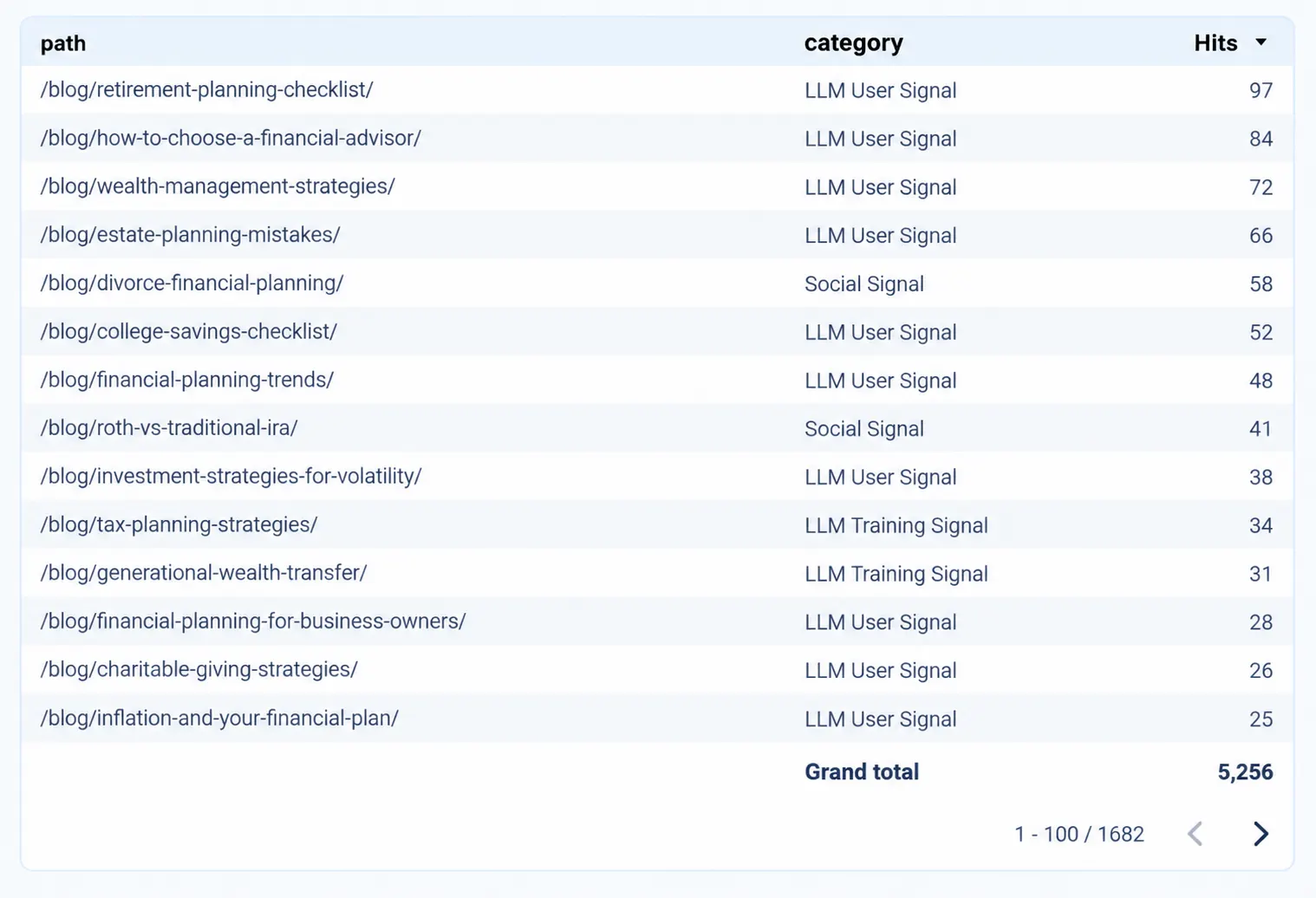
I look for a few things:
- Which URLs are generating the most signals?
- Are blog posts, landing pages, tools, or other resources dominating?
- Which pages are being referenced by AI platforms?
- Which pages are being shared through social or private channels?
- Are there unexpected pages outperforming content we assumed would be more influential?
That last question is especially important. I’ve seen articles that wouldn’t necessarily stand out in a traditional traffic report rise to the top once we look at off-site activity.
But I wouldn’t automatically call the page with the most signals your “best” content. The real value comes from looking for patterns across multiple pages. If several of your top-performing URLs cover similar topics, answer similar questions, or serve the same audience, that’s when the data starts telling us something useful about where to focus next.
2. Identify the topics your audience and AI platforms keep consuming
Once you know which pages are generating signals, zoom out from the individual URLs and look at the topics connecting them.
One article earning significant off-site visibility is interesting. Several high-signal articles covering the same subject tell us much more about where your brand is building authority and what your audience is actively consuming.
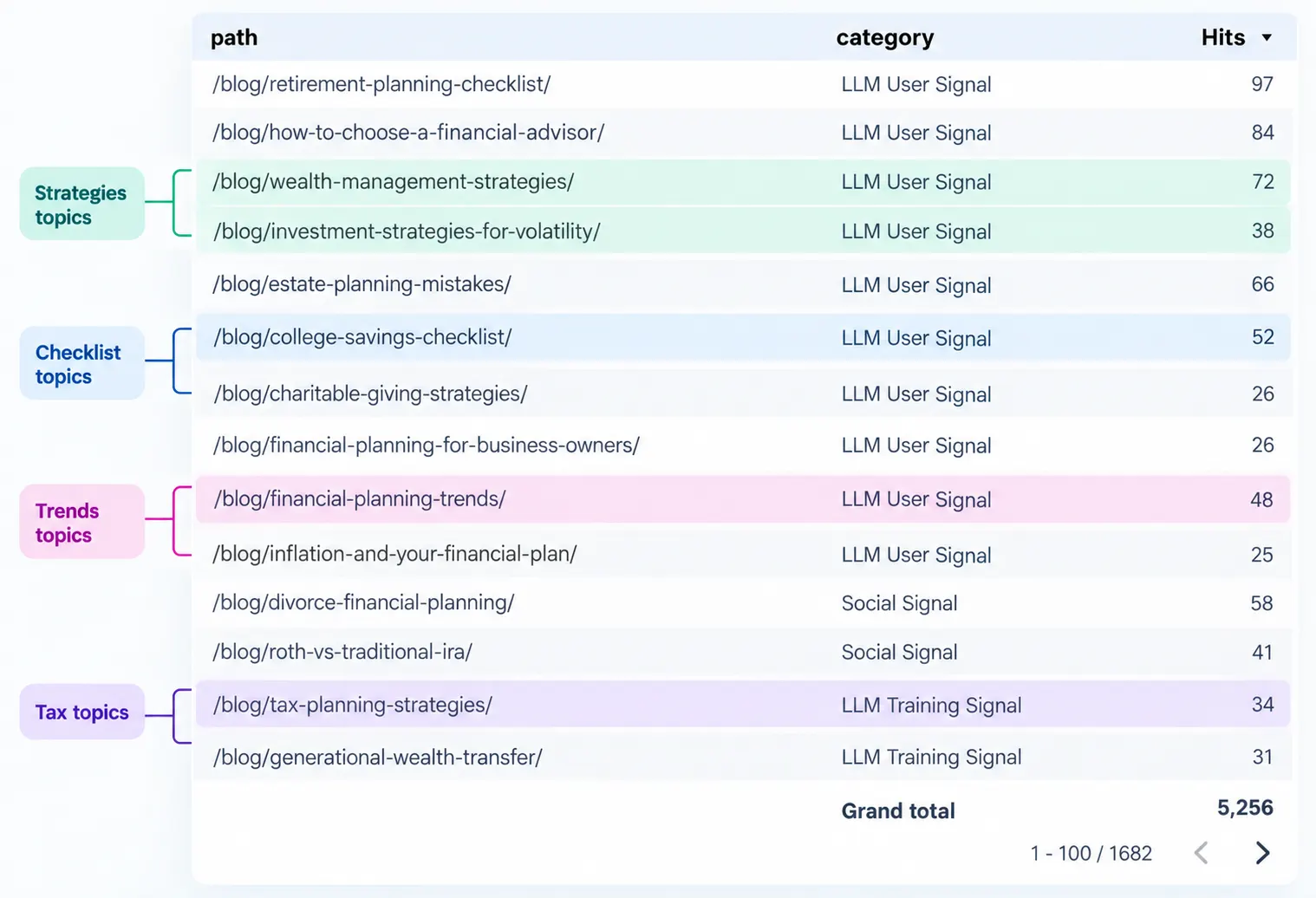
Look for patterns such as:
- Repeated subject areas
- Related questions within the same topic
- Similar search or research intent
- Specific audience segments
- Where topics fall within the buyer journey
This is where Trustworthy Signals™ starts influencing your broader content strategy. Instead of simply knowing which articles performed well, you can identify content clusters that already have momentum and decide where deeper coverage makes sense.
For me, that’s much more actionable than saying, “This article got 500 signals.” The better question is: What does this tell us about what our audience wants to know next?
3. Expand topics that already show demand
Once you’ve identified a topic consistently earning off-site visibility, the next step is figuring out how to build on that momentum.
Instead of starting every content brainstorm from scratch, use those signals to guide where you go deeper. That could mean:
- Answering related questions your existing content doesn’t cover
- Creating more specific articles for different audiences or use cases
- Building bottom-of-funnel content around a topic showing strong interest
- Refreshing and expanding the original high-signal article
- Strengthening internal links between related resources
- Connecting educational articles to relevant service or product pages
The goal isn’t to publish five variations of the same article. It’s to ask, “If our audience already cares about this topic, what would naturally help them next?”
That gives you a much stronger foundation for building a content cluster than relying on keyword volume alone. You’re using actual audience behavior to decide where deeper coverage could strengthen visibility, authority, and eventually, the path toward conversion.
4. Refresh content that is already being consumed
Sometimes the best content opportunity isn’t publishing something new. It’s improving the content that already has an audience.
If an older article continues generating AI citations, social shares, or other off-site signals, that’s a pretty good reason to take another look at it. The content is already earning attention, so your job is to make sure it still deserves it.
Review high-signal content for:
- Accuracy: Is the information still correct and relevant?
- Statistics and sources: Are there newer or stronger data points available?
- Examples: Could you add more specific or current examples?
- Search intent: Does the page still match what people are looking for?
- Answer completeness: Are there important questions or angles the article doesn’t address?
- AI-friendly structure: Are key questions answered clearly and directly?
- Internal links: Does the article connect readers to useful supporting content?
- Conversion paths: Is there a natural next step for someone who wants to learn more or take action?
I like prioritizing refreshes this way because it gives us another signal beyond rankings and traffic to decide which content deserves attention. If an article is already being consumed and referenced outside your website, improving it can help protect that visibility while making the asset more useful to both your audience and the platforms surfacing it.
5. Compare off-site visibility with search and lead performance
Off-site visibility becomes much more meaningful when you compare it with the performance data you already have.
Trustworthy Signals™ lets us look at signal activity alongside metrics like:
- Branded search impressions
- Branded search clicks
- Organic visibility
- Lead volume
- Qualified opportunities, when that data is available
This helps us look for relationships between off-site content consumption and what happens next. For example, if signals around a topic increase during the same period as branded search activity, that’s worth investigating. The same goes for changes in leads or qualified pipeline.
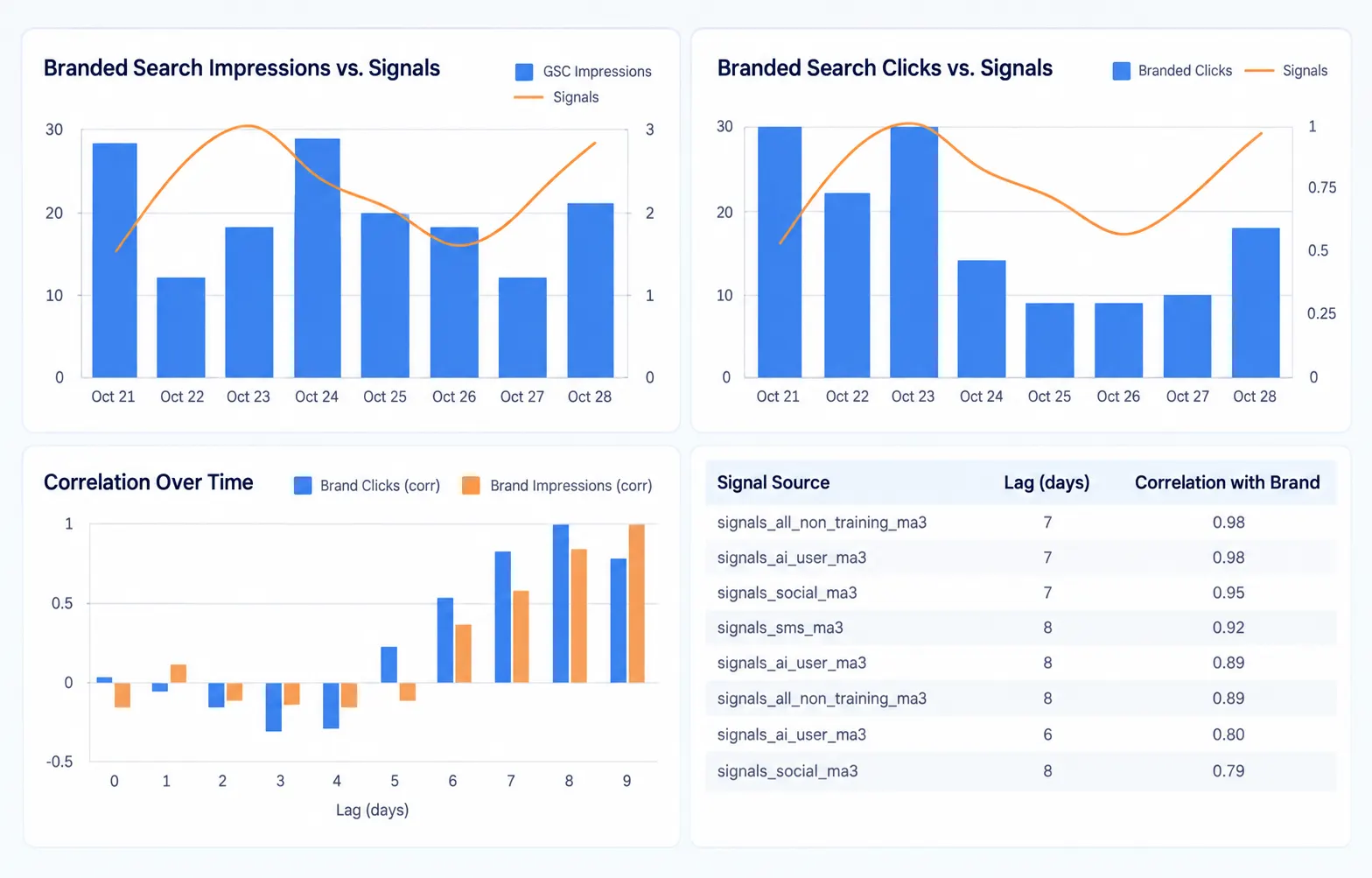
The key word here is correlation. An increase in AI citations doesn’t prove that those citations caused someone to search for your brand or become a lead. But seeing these trends together gives us more context for evaluating content influence and deciding where further investment makes sense.
For me, that’s a much more useful way to think about AI visibility than simply counting citations. The goal is to understand whether the visibility we’re earning aligns with the business outcomes we actually care about.
What to do when a high-signal page isn’t generating traffic or leads
If an article is getting cited or shared frequently but isn’t driving much traffic or conversion activity, is it actually valuable?
Potentially, but signal volume alone doesn’t answer that question.
This is why I don’t evaluate Trustworthy Signals™ data in isolation. I compare off-site signals with traditional performance metrics to understand the role a piece of content may be playing.
| Performance pattern | What it may tell you | What to do next |
| High signals + high traffic/conversions | Strong performer across multiple channels | Protect the page and look for opportunities to expand the topic |
| High signals + low traffic/conversions | Potential off-site authority builder | Investigate where it’s being consumed and whether the conversion path can be improved |
| Low signals + high traffic/conversions | Strong search or conversion asset | Keep investing in what works. AI visibility isn’t the only measure of content value |
| Low signals + low traffic/conversions | Limited measurable impact | Consider refreshing, repositioning, consolidating, or removing the content |
The important part is not treating any one metric as the final verdict.
Google Analytics and Search Console still tell us a lot about how content performs. Trustworthy Signals adds another layer to that analysis, helping us see influence that those platforms weren’t designed to capture.
The goal is a more complete picture of content performance, not a new vanity metric.
Build content for search, AI visibility, and your actual audience
A strong content strategy shouldn’t optimize for a single metric or platform. Rankings matter. AI citations matter. Traffic and conversions matter. But none of those should come at the expense of creating content that’s genuinely useful to the person on the other side of the screen.
The strongest content should be able to:
- Rank when prospects search for relevant questions and solutions
- Answer questions clearly enough to be summarized or cited by AI platforms
- Demonstrate genuine expertise instead of repeating what’s already ranking
- Build authority around the topics your brand should be known for
- Support prospects at different stages of the buyer journey
- Give qualified prospects a logical next step when they’re ready to take action
This is also where answer engine optimization fits into the broader content strategy. Structuring content so AI systems can understand, retrieve, and cite it is important, but getting cited isn’t the end goal.
The content still needs to serve the person asking the question and support the larger path from discovery to trust to conversion. That’s what turns AI visibility into something worth investing in.
Turn content signals into a repeatable strategy
Content strategy has always involved some educated guessing. Keyword research tells us what people search for. Analytics tells us what they do after they arrive. Trustworthy Signals™ gives us another piece of the picture: what happens to your content beyond your website.
And if there’s one thing I’ve learned from reviewing this data, it’s that your highest-impact content isn’t always your highest-traffic content.
The goal isn’t to chase AI citations or start publishing content just because an LLM might pick it up. It’s to understand where your expertise is already earning attention and use those insights to make smarter decisions about what you create, refresh, expand, and invest in next.
Want to see which content is working beyond the click?
Trustworthy Signals™ reveals where your content is being surfaced, referenced, and shared across AI, social, and messaging channels, and how that activity relates to branded search and lead performance.