
Google rankings still matter for financial advisors, but they no longer tell the full story. Prospects increasingly ask ChatGPT, Gemini, Claude, and Google AI Overviews for advisor recommendations before they ever click through to a website, and RIAs need visibility in both places.
In this guide, we’ll explain how SEO and AI search optimization differ, why traditional search still matters, where AI-driven discovery changes the game, and how RIAs can build one strategy that supports visibility across Google, AI Overviews, and platforms like ChatGPT and Perplexity.
Key takeaways:
- SEO and AI search optimization solve different problems: SEO earns visibility in Google rankings, while AI search optimization earns visibility inside AI-generated answers.
- Both channels reward the same foundation: Structured, authoritative content built for clarity supports rankings and AI citations at the same time.
- AI readiness is not guaranteed by SEO alone: Trustworthy Digital’s 2026 benchmark found that 15 leading RIAs averaged just 62 out of 100 on AI readiness.
- Citations can happen without a click: A firm can be referenced in an AI-generated answer before a prospect ever visits the website.
- Measurement needs to expand beyond rankings and traffic: Citation frequency, AI referral traffic, and share of voice are now part of the visibility picture.
SEO vs. AI search optimization: what’s the difference?
SEO helps financial advisors earn visibility in traditional search results on Google, while AI search optimization helps firms become part of AI-generated answers, recommendations, and summaries in tools like ChatGPT. Modern RIA marketing strategies need both working together.
| SEO | AI Search Optimization |
| Optimizes for Google rankings | Optimizes for AI-generated answers |
| Focuses on clicks | Focuses on citations and visibility |
| Keywords drive optimization | Questions and context drive optimization |
| Backlinks build authority | Multi-source trust signals build authority |
| Success measured by rankings and traffic | Success measured by citations, mentions, and AI visibility |
Why SEO still matters for financial advisors
SEO still matters because prospects continue to search Google directly when comparing financial advisors, especially by location and specialty. Strong SEO for financial advisors can help generate qualified consultations and support a more consistent pipeline.
For RIAs, that visibility matters because search often sits directly in the evaluation path between a referral, an initial discovery, and a qualified consultation.
A strong SEO foundation covers several connected areas:
- Organic visibility for the terms prospects actually search
- Qualified traffic that matches the firm’s ideal client profile
- Local search presence in the markets a firm serves
- Technical website health that supports crawlability and user experience
- Authority building through backlinks, reviews, and industry mentions
AI platforms frequently rely on content that already performs well in traditional search, making SEO the foundation for broader digital visibility.

Where AI search optimization changes the game
AI search optimization expands visibility beyond traditional rankings by helping financial advisors appear within AI-generated answers, citations, and recommendations. This changes how firms can be discovered and evaluated before a prospect ever reaches their website.
Trustworthy Digital’s 2026 AI Readiness Benchmark found that 15 leading RIAs earned an average AI Readiness Score of just 62 out of 100. Most firms have the foundations to be discovered online, but discoverable does not mean visible in AI-generated search experiences.
AI summarizes instead of ranking
Prospects increasingly use conversational, question-based searches when researching financial advisors. AI search experiences synthesize information from multiple sources into a direct response instead of a ranked list. A 2026 study found AI Overviews appeared for more than 64% of question-form queries.
Citations replace clicks as an early trust signal
An RIA can gain visibility inside an AI-generated response through citations before a prospect visits its website. Being cited can introduce the firm and reinforce credibility earlier in the research process. Firms without this foundation are often overlooked in AI search, even with accurate content.
Brand visibility happens before prospects visit your website
AI search expands the portion of the prospect journey that happens off-site. A prospect may encounter an RIA in an AI Overview, compare it with other firms, and learn about its expertise before ever conducting a branded search or visiting the website.
For RIAs, that matters because much of the trust-building and comparison process can now happen before a firm has a chance to measure the interaction through traditional website analytics.
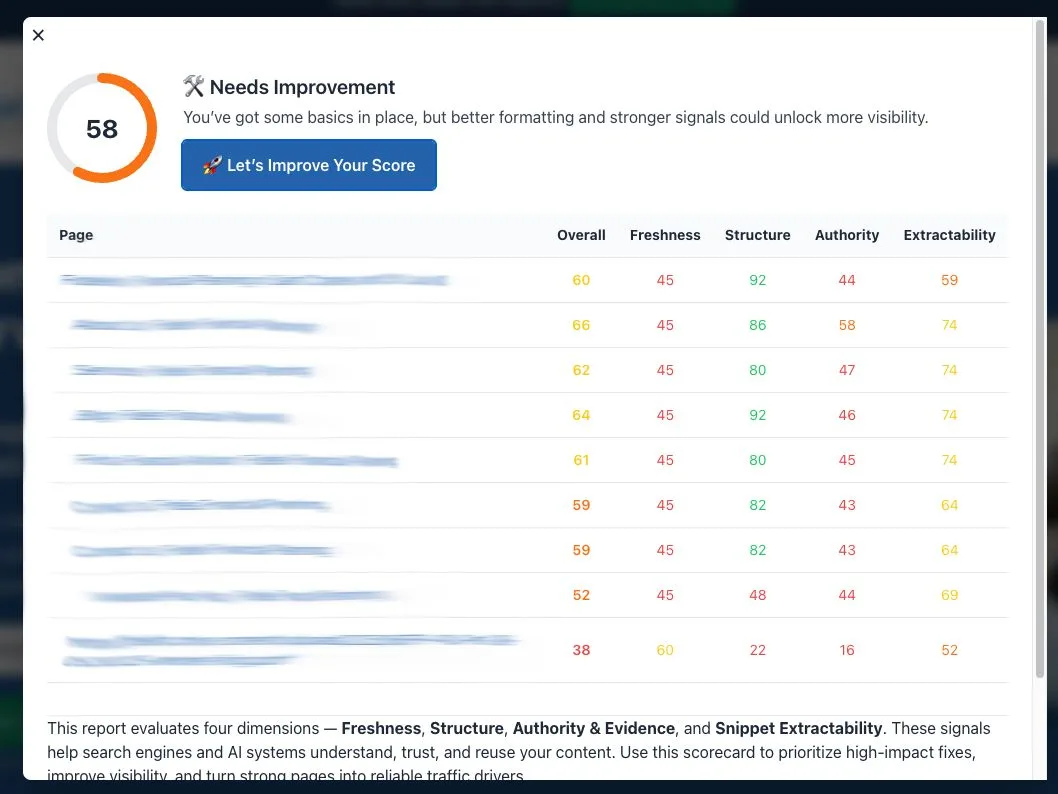
How ready is your firm for AI search?
See how your website performs across the factors that influence AI visibility with Trustworthy Digital’s free AI Readiness Assessment.
How SEO and AI search optimization work together
SEO and AI search optimization rely on many of the same fundamentals. The difference is where that authority gets surfaced. Traditional SEO helps firms earn visibility in search results, while AI optimization extends that visibility into AI-generated answers and recommendations.
Helpful content supports both
Content that demonstrates genuine expertise around the questions prospects are asking remains fundamental to both traditional rankings and AI citations. Firms do not need to create separate “AI content.” The same well-structured, authoritative content supports both goals.
Trust and authority extend beyond your website
SEO has long relied on authority signals beyond a firm’s website, including backlinks and local signals. AI search expands the importance of that broader digital footprint through third-party mentions, directories, reviews, and publications that corroborate who the firm is and what it is known for.
A 2026 study also found that nearly 30% of domains cited in Google AI Overviews did not appear in first-page results, a pattern we explore further in our piece on stricter trust filters in AI search. Ranking highly and earning an AI citation are related but not identical.
Clear content structure improves discoverability
Search engines and AI systems both need to understand what a page is about and how information relates. Clear headings, direct answers, and consistent topical organization help both systems interpret content accurately, which supports rankings and citations alike.
Strong brand visibility compounds across search
Search visibility increasingly happens across an ecosystem. A prospect might discover an RIA through Google, encounter the firm again in an AI-generated answer, and eventually search for the brand directly. SEO and AI visibility reinforce one another rather than operating as isolated channels.
Measuring visibility across traditional and AI search
Rankings and organic traffic no longer tell the entire search visibility story. A complete picture now includes signals from both traditional and AI-driven discovery.
Traditional search visibility:
- Rankings
- Organic clicks
- Impressions
- Organic conversions
AI search visibility:
- Brand mentions
- Citation frequency
- Citation share and share of voice
- AI referral traffic
- LLM user signals
An AI Readiness Assessment is a useful starting point for understanding where a firm stands today. Trustworthy Signals™ closes the measurement gap further by showing where a firm is cited or bypassed across AI-driven search, connecting that visibility to search demand and marketing performance.

Frequently asked questions
Is AI search optimization replacing SEO?
What is AI search optimization for financial advisors?
Is AEO the same as GEO?
How do financial advisors appear in ChatGPT results?
How can RIAs measure AI search visibility?
SEO and AI search optimization are stronger together
RIAs do not need to choose between SEO and AI search optimization. Firms need a search strategy that accounts for how discovery is expanding across Google, AI Overviews, ChatGPT, and other AI-driven experiences.
See how it all connects
Explore how visibility, conversion, and measurement work together inside one operating model.