

Cookie consent has become an important part of managing privacy on RIA websites, especially as firms rely on analytics, advertising, and other tracking tools to understand how prospects engage online. But adding a cookie banner is only part of the equation. How that banner and the tracking behind it are configured can determine what marketing data your firm can actually collect.
In this guide, we’ll explain how cookie consent works, how it affects analytics and attribution, and what RIA marketing teams should consider when implementing or reviewing their consent setup. This article focuses on marketing and measurement considerations, not legal advice. Firms should confirm applicable requirements with legal or compliance counsel.
Key Takeaways
- Cookie consent controls what marketing tools can see: When a visitor declines tracking, tools like Google Analytics 4 (GA4) and Google Ads may receive incomplete or no data about that session.
- Untracked activity is not lost activity: A prospect can still submit a form or call the firm even when their earlier visit never appears in analytics.
- Attribution gaps widen without a plan: Retargeting audiences, conversion counts, and channel comparisons can all shift when consent configurations change.
- Measurement and compliance are separate conversations: Marketing should review consent for its effect on data, while legal or compliance confirms what privacy laws actually require.
What is cookie consent?
Cookie consent is the process of giving website visitors control over whether certain cookies and tracking technologies can be used during their visit.
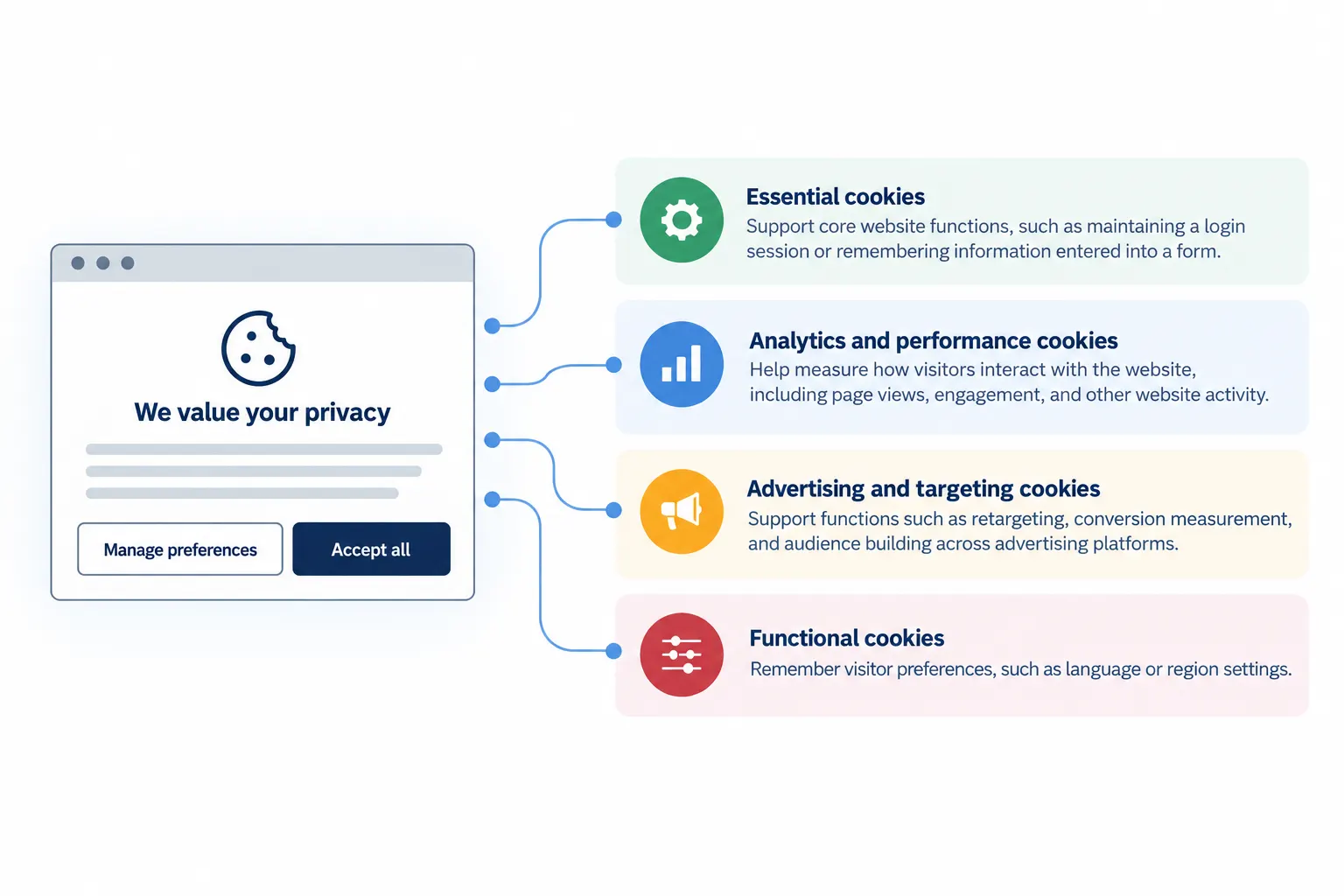
Cookies and tracking technologies are commonly grouped into categories based on their purpose:
- Essential cookies support core website functions, such as maintaining a login session or remembering information entered into a form.
- Analytics and performance cookies help measure how visitors interact with the website, including page views, engagement, and other website activity.
- Advertising and targeting cookies support functions such as retargeting, conversion measurement, and audience building across advertising platforms.
- Functional cookies remember visitor preferences, such as language or region settings.
Not every cookie or tracking technology requires the same treatment. What applies depends on the technology being used, how visitor data is processed or shared, and the privacy requirements that apply to the firm.
Why cookie consent matters for RIA marketing teams
RIA marketing teams rely on website and campaign data to answer basic growth questions:
- Which channels generate qualified inquiries
- Which landing pages influence conversions
- Which campaigns contribute to pipeline
- Where the firm should increase or reduce investment
Cookie consent can limit the data available to answer those questions. The challenge is recognizing where consent choices affect measurement so reporting reflects those limitations.
Cookie consent can create gaps in analytics data
When analytics tags require consent before collecting data, some website visits and behaviors may not appear in platforms such as GA4 or Microsoft Clarity.
Untracked activity is not the same as nonexistent activity. A decline in reported sessions, engagement, or conversions after implementing a consent platform needs to be interpreted in context rather than assumed to be a decline in actual performance. Proper tag configuration narrows that gap considerably, so most of what looks like lost data is really a setup issue to fix, not a permanent blind spot.
Advertising attribution can become less complete
Consent choices can also affect advertising and conversion tracking. Depending on the firm’s setup, this can influence:
- Paid search and social attribution
- Retargeting audience size
- Conversion measurement
- Cross-channel comparisons
Marketing teams need to account for these limitations when evaluating campaign performance and deciding where to invest.
Consent can affect pipeline reporting
If a prospect’s first website visit goes untracked but they later submit a form, call an advisor, or enter the CRM, marketing may have an incomplete picture of the journey that produced the opportunity.
The prospect and opportunity still exist. What changes is marketing’s visibility into which interactions contributed to them.
What should an RIA cookie consent process include?
Marketing teams typically work alongside legal, compliance, development, and analytics stakeholders to make sure the website’s consent experience reflects both the firm’s privacy requirements and its actual tracking setup.
Cookie and tracking technology inventory
Start by identifying what is actually running on the website. This may include analytics platforms, advertising pixels, embedded videos, CRM and marketing automation scripts, chat tools, behavioral analytics tools, and third-party integrations.
Cookie categorization
Tracking technologies should be classified based on their purpose so they can be handled appropriately within the consent setup. A chat widget, analytics tag, and retargeting pixel may collect and use data differently.
Consent banner and preference controls
The consent experience should clearly communicate visitors’ choices and make it easy to manage their preferences. Marketing teams should also confirm that the banner’s behavior matches the firm’s approved privacy requirements and the tracking technologies actually in use.
Consent records
Depending on applicable requirements, the firm may need to maintain records of visitor consent choices and changes over time. Legal or compliance counsel should determine what records are required and how long they need to be retained.
Privacy and cookie notices
Published privacy and cookie notices should accurately reflect the technologies and data practices in use. Marketing, compliance, development, and analytics teams should coordinate when tracking technologies change so the website and its disclosures remain aligned.

How do state privacy laws affect RIA cookie consent?
State privacy laws can affect how firms collect, use, and share data through their websites, but requirements vary by state and may not apply to every RIA in the same way. Factors can include where visitors are located, the types of data collected, how that data is used or shared, and whether an exemption applies to the firm or certain data.
Marketing teams should be aware of requirements that can affect website tracking, including opt-in or opt-out mechanisms, targeted advertising, and browser-based privacy signals.
One example is Global Privacy Control (GPC), which lets users communicate certain privacy preferences through their browser or browser extension. Connecticut requires businesses covered by its privacy law to recognize qualifying opt-out preference signals, and its Attorney General reports that more than 40 million people use GPC.
Important: Marketing teams should work with qualified legal or compliance professionals to determine which privacy requirements apply to their firm. This article focuses on the marketing, analytics, and attribution implications of cookie consent.
How cookie consent affects Google Analytics 4 and marketing tags
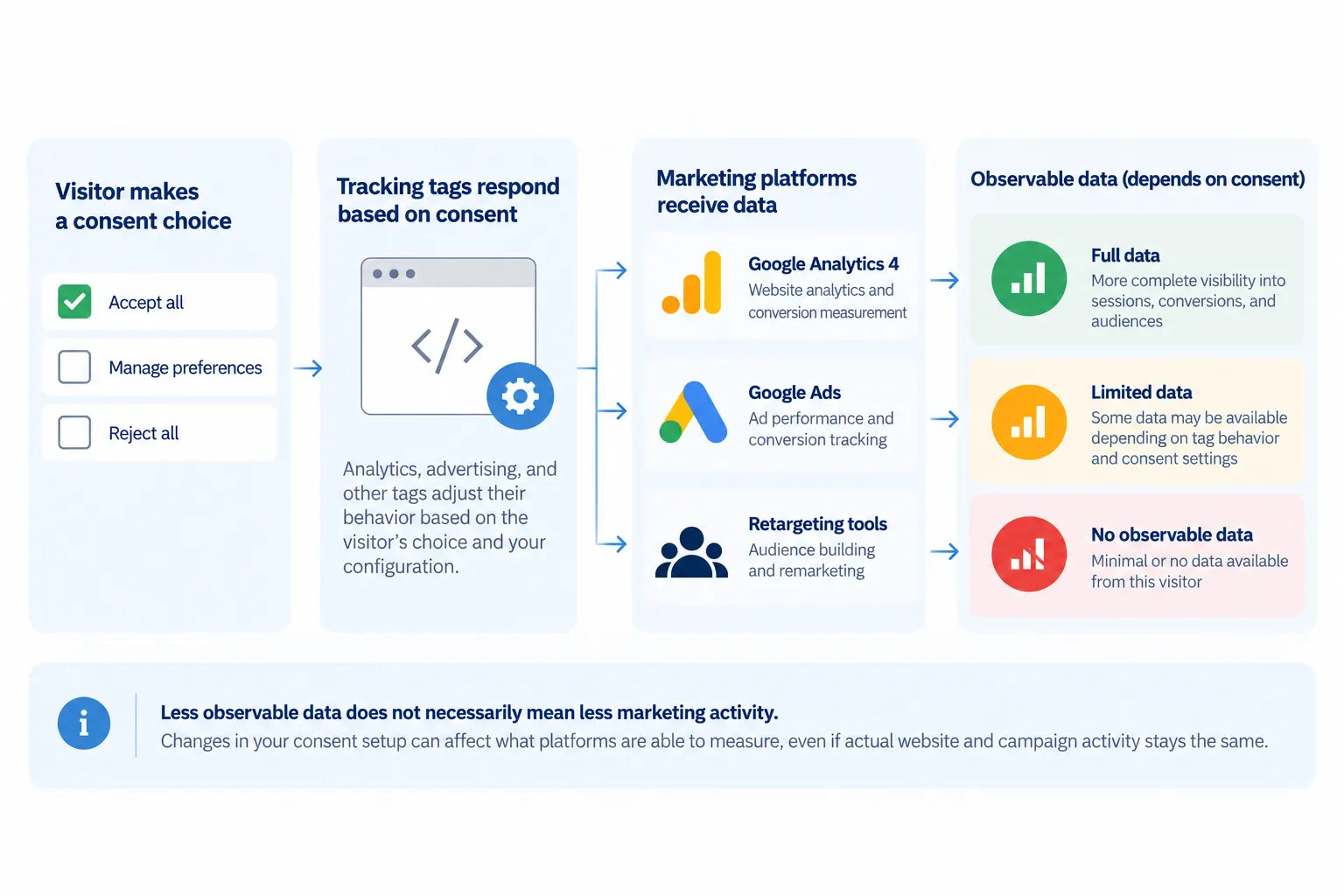
Cookie consent can directly affect what marketing platforms are able to measure. The basic flow is simple: a visitor arrives, the consent mechanism loads, the visitor makes a choice, and tracking technologies respond based on that choice and the site’s configuration.
Google Analytics 4
Cookie consent can affect the visitor data available in Google Analytics 4 (GA4). Depending on the site’s consent and GA4 configuration, marketing teams may have less visibility into sessions, engagement, traffic sources, and conversions when visitors decline analytics cookies.
This is why changes to a firm’s consent setup should be documented alongside changes in GA4 performance. A shift in reported traffic or conversions may reflect a measurement change rather than a change in actual marketing performance.
Google Ads and retargeting pixels
Consent choices can also affect advertising measurement and audience building. Depending on the setup, fewer visitors consenting to advertising cookies can reduce observable conversions and limit the data available for retargeting audiences.
Marketing teams should account for these limitations when comparing paid campaign performance before and after consent changes.
Google Consent Mode
Google Consent Mode allows Google tags to adjust their behavior based on the consent choices communicated by the website. Depending on the implementation and consent state, Google tags may change how they use cookies and send data to Google.
Consent Mode does not determine whether a firm is required to obtain consent. It responds to the consent state provided by the website, so legal and compliance teams still need to determine what consent requirements apply.
Not sure if your tags are firing correctly?
Get a free, no-obligation review of your cookie consent setup and tag configuration. We’ll flag any gaps between what your site is set up to track and what it’s actually collecting.
Why your marketing reports may change after implementing cookie consent
A drop in reported traffic or conversions after implementing or changing a consent platform does not necessarily mean marketing performance declined. The measurement environment itself may have changed.
| Reported change | What marketing teams should investigate |
| Organic sessions decline | Whether analytics tags now require consent before collecting data |
| Paid conversions decline | Whether advertising or conversion tags changed behavior |
| Direct traffic changes | Whether consent changes are affecting how traffic sources are attributed |
| Retargeting audiences shrink | Whether fewer visitors are consenting to the tracking used for audience building |
| Form submissions stay stable while sessions fall | Whether conversions are being captured separately from website session data |
| Year-over-year reporting suddenly shifts | Whether the current and comparison periods use different consent configurations |
How to evaluate your RIA’s cookie consent setup
RIA marketing teams should periodically review how consent settings affect both website tracking and the accuracy of performance reporting.
- Inventory your tracking tools. Document the analytics, advertising, CRM, and third-party technologies running on the website.
- Confirm how tags respond to consent. Check how tracking technologies behave before a visitor makes a choice, after consent is granted, and after it is declined.
- Test the consent experience. Verify that the banner and preference controls work properly and that tracking behavior reflects each consent choice.
- Compare performance data. Look for meaningful changes in sessions, conversions, channel attribution, or other metrics after implementation or configuration changes.
- Document measurement limitations. Make sure reporting accounts for tracking changes that could otherwise be mistaken for changes in marketing performance.
- Review the setup regularly. Reassess consent settings when website technology, tracking tools, or applicable privacy requirements change. Build privacy changes into your measurement strategy
Perfect attribution has never existed, and increasing privacy controls make it even more important for RIAs to understand the limitations of their marketing data. The goal isn’t to collect every possible data point. It’s to build a measurement system leadership can trust, one that makes clear what’s being measured, where gaps exist, and how marketing activity connects to CRM and pipeline data.
At Trustworthy Digital, we call this measurement integrity, one of the core disciplines built into our Revenue Performance System.
How reliable is your marketing measurement?
Our Performance Diagnostic identifies gaps in attribution, tracking, conversion paths, and channel performance that make it harder to connect marketing activity to qualified pipeline.